Hull joins world-leading study to screen newborns for genetic conditions

Communications TeamNews

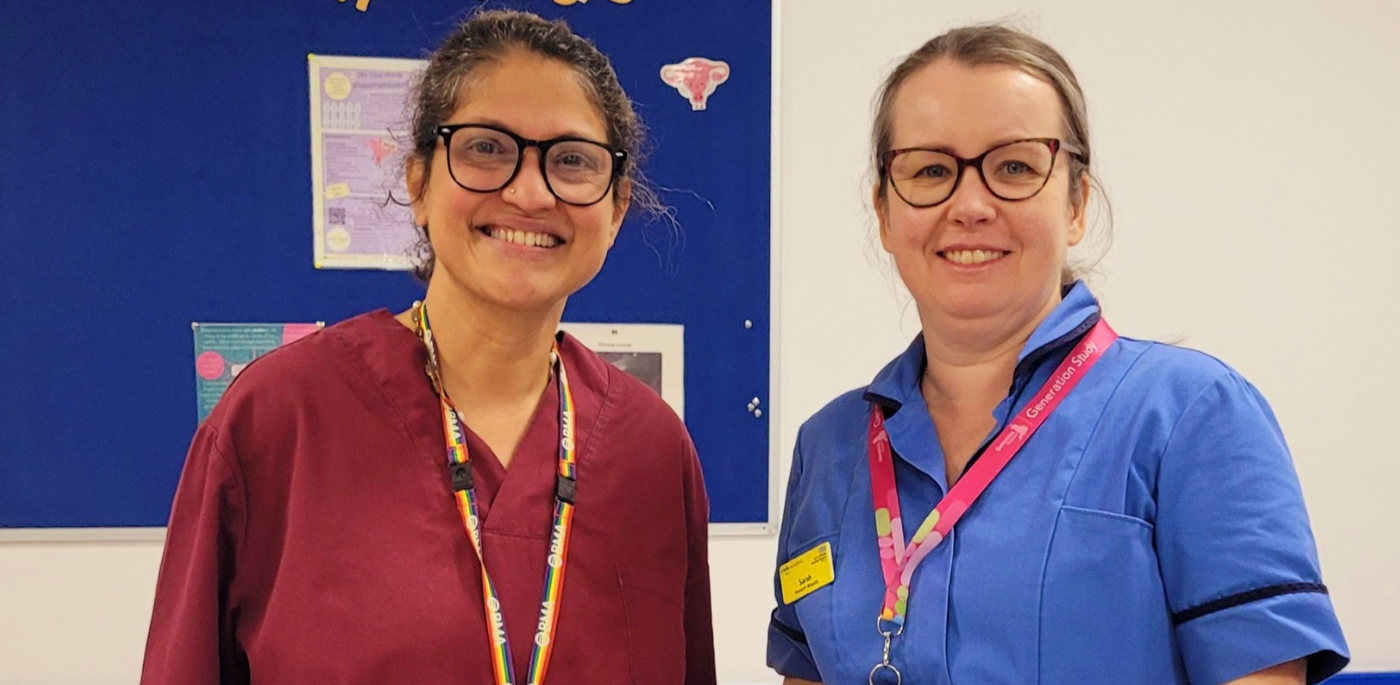
Dr Uma Rajesh, principal investigator, and research lead midwife, Sarah Collins

Researchers in Hull have joined one of the world’s leading genetic screening studies for newborn babies.

A team based at Hull Royal Infirmary, led by obstetrics and gynaecology consultant and principal investigator, Dr Uma Rajesh, will join more than 40 other NHS Trusts and organisations in recruiting to the Generation Study, led by Genomics England in partnership with NHS England.

This pioneering study seeks to screen newborn babies for more than 200 rare genetic conditions by offering whole genome sequencing using blood samples normally taken from the umbilical cord shortly after birth.

The aim is to identify conditions such as spinal muscular atrophy and metachromatic leukodystrophy (MLD) in babies sooner, through screening 100,000 study participants.

Hundreds could also benefit from earlier diagnosis and treatment that could help slow the progression of disease and improve or even extend their lives.

The sequencing identifies treatable, rare conditions shortly after a baby is born rather than when symptoms might appear later in childhood. This means families can access the right support, monitoring, and treatment from the NHS much earlier for these conditions. In turn, effective early intervention can help to prevent longer term health problems associated with certain conditions, keeping children out of hospital, and helping them live healthier lives.
Women and Children's Hospital signage

Dr Uma Rajesh, principal investigator for the Generation Study in Hull says:

“Taking part in the Generation Study gives local people the chance to access potentially life-changing information about their baby’s health at a very early stage. We know that babies’ health is one of the top priorities for new and expectant parents, so parents-to-be will now be made aware of the study during pregnancy and, if interested, will be offered a follow-up discussion with a research midwife for more details.

“Participation is entirely voluntary, but the study brings the potential to help some families identify issues and begin treatment much earlier on in the baby’s life.

“For our research team, being given the opportunity to take part in such a high-profile and world-leading study is a real privilege. We’re keen to give local people – both staff and professionals – the opportunity to represent our region and input into such an important and potentially life-changing study, but we also want families to benefit from its outcomes and to help give children the best possible start in life.”

If a newborn baby is identified as having a treatable childhood condition through the genome sequencing, families and carers will be provided with further NHS testing to confirm a diagnosis, and ongoing support and treatment from the NHS.

Every year, thousands of children are born in the UK with a treatable rare condition with genetic testing usually taking place in the NHS Genomic Medicine Service when the child has developed symptoms – with children under the age of 5 disproportionately affected.

The existing NHS blood spot screening (the heel prick test) is used to detect 10 rare but serious health conditions in newborn babies. The Generation Study is not intended to replace this routine screening, and it is important that whatever decision parents make about participation in the Generation Study, their baby still has the blood spot test.

It is hoped that screening babies’ entire genomes – all of their DNA – could detect hundreds more rare, treatable diseases in their first years of life.

NHS teams will also provide families with advice on how to manage different conditions, for example for one of the conditions, osteogenesis imperfecta, parents can be advised on handling of their newborn to prevent long-term damage to their child’s bones.

The study will also support broader healthcare research to improve testing and discover more treatments and explore the potential of storing an individual genome over a person’s lifetime and using it to help predict, diagnose and treat future illnesses.


Gold standard of support for our Armed Forces

sarah.howson3@nhs.netNews

The logo of the Gold Armed Forces Covenant award

We are extremely proud to have been awarded Armed Forces Covenant Gold Award for our work in supporting veterans and serving members of the forces across NHS Humber Health Partnership.

Having previously been awarded Gold by the Ministry of Defence, it has been announced that Hull University Teaching Hospitals NHS Trust has retained the accolade. Northern Lincolnshire and Goole NHS Foundation Trust was also awarded Gold last year.

Armed Forces Champion, Jan Fillinger, said: “We are very proud of the support we provide to veterans, serving members of the armed forces, and their families in our area, 24 hours a day, seven days a week.

“We know how important it is to understand your additional needs when providing care in our hospitals and in the community.

“We are also committed to helping those of you who have left the forces to adapt to civilian life, by providing career opportunities.

“There are many life skills that are transferrable from the military into the NHS, and we are happy to support you into this next phase of your career.”

Trust first to use “game-changing” drug to treat haemophilia

Simon LeonardNews

A group of people stood smiling in a room

A Hull teenager with severe haemophilia has become the first person in the country to be treated with a new drug, which is much easier to administer.

The patient commenced his treatment with Marstacimab at Hull University Teaching Hospitals NHS Trust – making us the first Trust in the UK to use this drug – and the results have been very successful.

Haemophilia is a rare condition that affects the way blood clots, meaning those who have it bleed more easily than other people. It cannot usually be cured but treatment can help control the symptoms. Marstacimab is a weekly injection that targets a protein in the blood clotting process, and helps to prevent or reduce bleeding in patients with haemophilia A or B.

Haematology consultant, Dr Jireh Ann Batac has been instrumental in securing the use of this drug in our hospitals. It’s currently funded by the NHS to treat patients with severe haemophilia B. The main benefit is the way its administered, causing less discomfort for the recipient and making the process much easier.

She said: “This patient has severe haemophilia B, severe autism and development delay. Before this drug, the treatment was always intravenous (IV). This medication means they don’t have to inject using IV. That means his parents have been able to administer the injections at home, and there’s been no difficulty doing this or missed doses. This drug wasn’t previously available in the UK, so it’s great to be the first Trust to be able to offer this.”

The patient’s family said: “Marstacimab has enabled my severely-disabled child to gain access for treatment which was otherwise challenging. It truly was a game-changer for us. To be able to administer a treatment that is more pleasant for our son is something we are grateful for.”

Dr Batac attended a conference in Washington DC last year to present on this complex patient case. She had to do a verbal and poster presentation in front of a packed room.

She added: “Everyone was very engaged with the discussion and it was attended by world experts. They were all interested to hear about the case.”

We were highlighted in the launch of Marstacimab in the UK to share our experience, as we started using the drug before it was officially launched nationally.

Dr Batac has also been invited to speak in February to an international conference in Istanbul about our experience with Marstacimab.

New liver clinics to launch at Goole Hospital

Communications TeamNews

Exterior picture of Goole Hospital

A new monthly clinic designed to help spot the early signs of liver disease will launch in Goole later this month.

Specialist liver scans, known as fibroscans, will be offered to people identified as being at higher risk of liver disease, and will be carried out at Goole and District Hospital starting on 27 January.

The clinic will operate ‘by appointment only’, with hospital and primary care-based health professionals working together to identify and invite those with the greatest risk factors.

The new clinic has been introduced as a result of the success of another Goole-based hospital event, the ‘Fit 4 Life’ fair.

This free health and wellbeing event, held in November, gave patients, visitors and staff the opportunity to seek professional advice on healthier lifestyles and access on-the-spot tests and screening.

The Liver Health Team was among those taking part, and it was here that Beth Featherstone, community liver nurse specialist, identified a gap in the market for targeted liver screening in the Goole area.

Beth explains:

“We know that there are certain groups of people who are more at risk of liver disease than others, this includes people living with Type 2 diabetes with a BMI of 30 or more, those with Hepatitis B or C, and those who drink more than 14 units of alcohol per week.

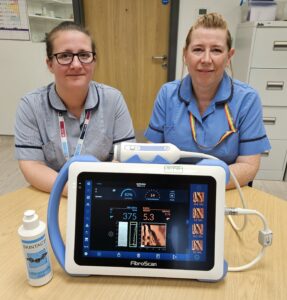
Faye (left) and Beth seated behind a fibroscan machine

Faye Coite (left) and Beth Featherstone with a fibroscan machine

“The difficulty with spotting liver disease is that often there are few actual symptoms until the disease is well progressed, and for some people, the first time they know there’s a problem is when they’re admitted to hospital in an emergency.

“At the recent Fit 4 Life event, we found people were really keen to know more about their liver health as it’s not something which generally gets a lot of airtime. We carried out a good number of fibroscans at the Goole session, and while we didn’t pick up many issues on the day, it did get us thinking about the need for more targeted screening in this part of East Yorkshire.

“So, from the end of this month, we’ll be working with local GPs, hospital doctors and a range of other health professionals to identify people who are at higher risk of liver disease and then inviting them to attend one of our new monthly clinics for liver screening.”

Fibroscans use ultrasound technology to check for signs of liver stiffness and can help to identify signs of liver disease which a person wouldn’t know were there, day-to-day. Early detection allows health professionals to assess the damage and either begin treatment or offer diet and lifestyle advice which could help to reverse any damage without the need for medical intervention.

Beth continues:

“This is the first time that the liver checks have been offered at Goole Hospital, meaning people who are identified as needing the scan will be given the opportunity to be seen locally, and not asked to travel outside the immediate area as they may have been previously.

“Patients attending screening will need to be identified by the team as someone who would benefit from a fibroscan in the first instance. That said, we would encourage anyone who has concerns about their liver health or the impact which their lifestyle choices may be having on their liver, to seek advice from their GP.

“We’re pleased to be in a position where we can now reach out and offer more support to the people of Goole and surrounding areas using the local hospital facilities. Liver disease can have serious consequences, but it’s also something that can be well managed if caught early enough, and that’s what we’re here to do.”

The next Fit 4 Life event will take place at Diana, Princess of Wales Hospital in Grimsby on Thursday 29 January, from 11am to 2pm in the main hospital restaurant – all welcome.

Hull consultant offers parents advice on keeping children well this winter

Communications TeamNews

A child wearing pink ear muffs and a winter coat sneezes, holding her hands over her nose

A hospital doctor specialising in paediatric medicine is encouraging parents to take steps to keep their children healthy and out of hospital this winter.

Winter temperatures can be challenging for babies and young children, increasing their vulnerability to illnesses such as colds, flu, bronchiolitis and respiratory syncytial virus (RSV).
Figures from NHS England show emergency hospital admissions for children under the age of 10 increase significantly during winter, with more than 30,000 emergency admissions of children in this age group each month with respiratory illnesses such as bronchiolitis and RSV the most common reason.
Now, Dr Kavitha Tharian, Consultant in Paediatrics at Hull Royal infirmary, said emergency teams are already seeing a surge in children with RSV and other respiratory infections in Hull.
Dr Tharian said: “The most important step a parent can take is ensuring their child is vaccinated, including the annual flu vaccine if they’re eligible. Pregnant women should also get vaccinated against RSV, which reduces the risk of their baby developing a severe infection by 70pc in the first six months of their lives. Speak to your GP, midwife or health visitor if you’re not sure how to arrange this.
“Good hygiene is also really important to protect your child from catching or spreading infection so make sure they wash their hands with soap and water, especially after coughing or sneezing, and before meals and after going to the toilet. Toys and surfaces should also be cleaned regularly to reduce germs spreading.”
Dr Tharian said layer clothing to keep children warm outside, including hats and gloves on colder days. Keep rooms at a comfortable temperature, around 18 degrees for sleeping, but ventilate regularly to reduce the risk of respiratory infections. Just avoid ventilation while children are in the room so they’re not in draughty areas.
If your child does become unwell, consult NHS 111 or ask your GP for guidance, particularly if they have breathing difficulties, are not feeding or are unusually sleepy. For a range of minor illnesses, pharmacists can give treatment and can tell you if you need to see a doctor.
Seek immediate medical attention if your child is struggling to breathe or making unusual noises when breathing, has a high temperature that does not come down with medication, is drowsy, unresponsive or difficult to wake or shows signs of dehydration such as fewer wet nappies, dry mouth or sunken eyes.

Searching for a hero

Charlie GrinhaffNews

Image of Golden Stars logo

Celebrate your Healthcare Heroes: nominate an NHS staff member today!

NHS Humber Health Partnership wants to hear about your healthcare heroes.  Do you know someone who goes above and beyond for their patients? Now’s your chance to recognise their dedication!

We employ more than 19,000 staff working across two trusts, five hospitals and community services, in both clinical and non-clinical roles.

Golden Stars is the annual awards ceremony celebrating employees of Northern Lincolnshire and Goole NHS Foundation Trust and Hull University Teaching Hospitals NHS Trust.

As part of these celebrations, we’re inviting nominations from patients and their families for the Healthcare Heroes Award.

Whether you’ve been a patient or visitor at Hull, Scunthorpe, Grimsby, Castle Hill, or Goole hospitals, or within our community services, we want to hear about the staff or teams who made a real difference to your experience. From compassionate individuals to outstanding teams, your nomination is a meaningful way to say thank you.

Interim Chairman for NHS Humber Health Partnership, Murray Macdonald, said: “This is your opportunity to shine a light on our incredible NHS heroes, who support more than a million patients each year. Help us celebrate their remarkable achievements by submitting a nomination today.”

Interim Group Chief Executive Lyn Simpson added: “With over 19,000 staff striving for excellence every day, there’s no better way to show your appreciation than by nominating someone who has made a positive impact on you or your loved ones.”

The winner of the Healthcare Heroes Award, along with 14 other categories, will be announced at the Golden Stars 2026 ceremony on Friday 3 July. Don’t delay, nominate someone today.

Humber Health Partnership Group announces leadership update

Communications TeamNews

The Humber Health Partnership has announced that Jonathan Lofthouse will be taking up a new role with NHS England from today, 12th January 2026.

Jonathan has led the formation of the Humber Health Partnership and played a central role in bringing partner organisations together and establishing the Group’s initial ways of working.

Murray Macdonald, interim Chair of the Humber Health Partnership Group, said: “I would like to thank Jonathan for his leadership of the Humber Health Partnership Group as he takes up a new regional role with NHS England.

“Jonathan has been instrumental in bringing the Humber Health Partnership Group together and in shaping the framework within which the partner organisations have come to work collectively. He has played a central role in establishing shared ways of working and in supporting the development of the Group as a collaborative partnership.

“On behalf of the Humber Health Partnership, I would like to sincerely thank Jonathan for his commitment and contribution and wish him every success in his new role. We are pleased that his experience will now be brought to bear at a regional level with NHS England in the North East and Yorkshire.

Murray Macdonald continued: “Our focus as a Partnership remains firmly on our clinically led improvement journey, with experienced clinicians shaping how we work together to improve care for our patients and communities under our interim Group Chief Executive Lyn Simpson’s leadership.”

How we’re helping to support bereaved children

Simon LeonardNews

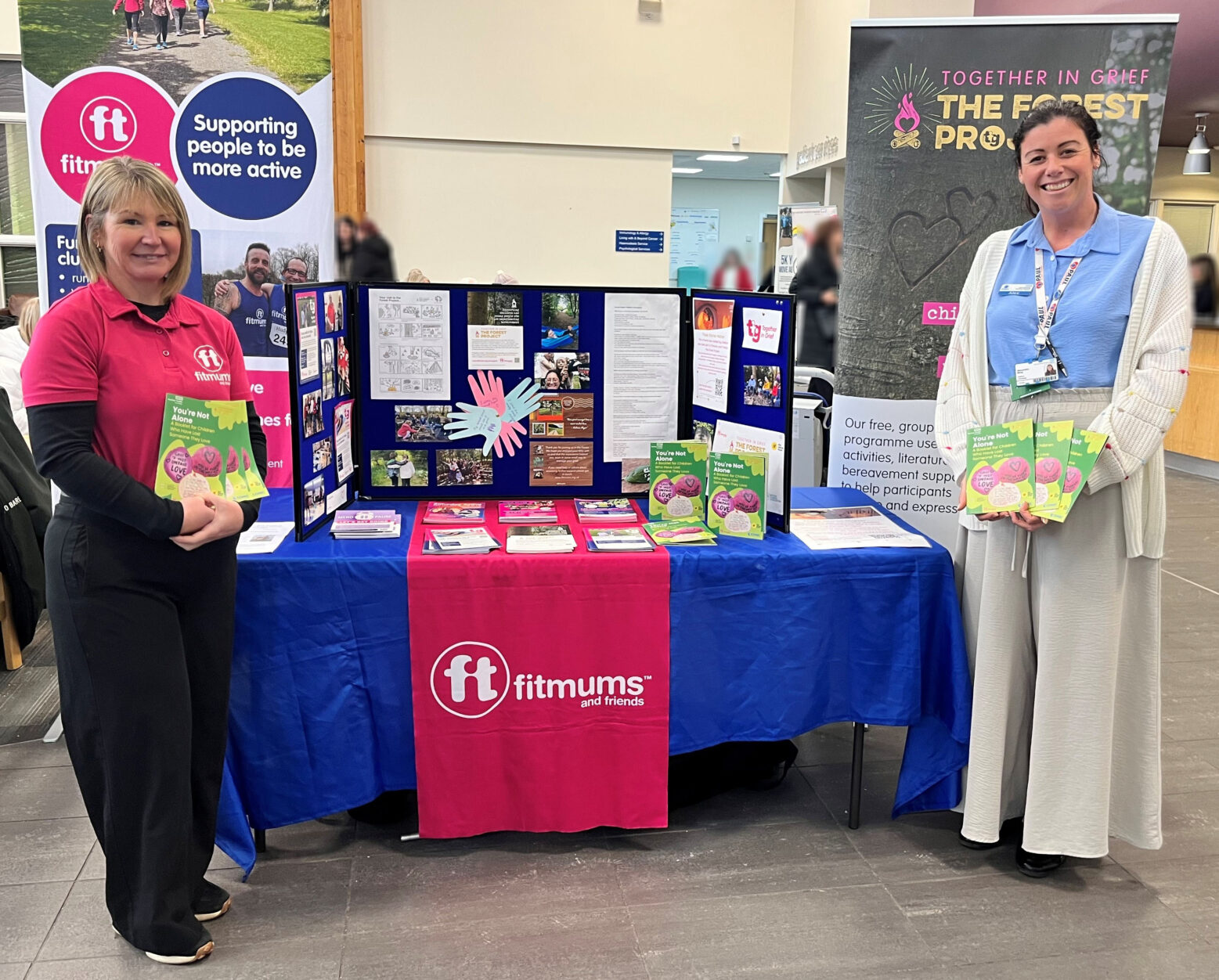
Two women stood in front of an information stand

We’re helping support children and young people who are dealing with bereavement.

A new booklet has been co-created with Alex Wray, End of Life Matron at Hull University Teaching Hospitals NHS Trust, in her role as a researcher for The Forest Project, which is run by local charity Fitmums & Friends. The Forest Project gives young people the opportunity to participate in forest activities such as den building, campfire cooking, tool making, tree climbing and forest games, whilst gaining support with their bereavement.

Children with experience of bereavement were also involved with the co-creation of the booklet.

It was given out at a recent event at Castle Hill Hospital to promote the support available for bereaved children and their families. They were able to discover local and national sources of help, pick up practical resources and information, and connect with professionals and community partners working in bereavement care.

Alex said: “The children’s voices and insights have helped shape a compassionate and hopeful resource designed to help others navigate grief with comfort, understanding, and strength.

“At the event, we had lots of different services and it was great to see what we can do to improve bereavement support in the area. Lots of staff came along to get information about how to signpost families. We also met with lots of people who are either grieving, had terminal illnesses or wanted to know how to support children.”

The booklet is very child-friendly and features lots of visuals, as well as interactive elements. An animation has previously been developed as part of this project.

Alex added: “We held some workshops last year with the children to gather their experiences and see what they needed. There was a lot more information they told us that we couldn’t get into the animation. It’s advice from a bereaved child for bereaved children. We’d like to develop a booklet for adults who are supporting bereaved children in the future.”

The booklet will be given out in our hospitals and also provided to GPs and local schools. Alex is looking forward to sharing the project at the Marie Curie Research into Practice Conference next month.

Expect a long wait at Hull’s A&E if you’re not an emergency

Communications TeamNews

Four ambulances parked outside the entrance to Hull Royal Infirmary's emergency department

People are being warned of long waits at Hull’s Emergency Department (ED) unless they are a genuine medical emergency as Hull Royal Infirmary comes under pressure.

A surge of “walking wounded” and people with seasonal illnesses and viruses have been turning up at the hospital’s Emergency Care Area in recent days, putting emergency services and frontline teams under strain.

Now, Humber and North Yorkshire Integrated Care Board (ICB), which covers Hull Royal Infirmary, is appealing to the public to use alternative services such as their GPs, local pharmacists or one of the Urgent Treatment Centres in Goole, Bridlington, Bransholme, Hull or Beverley unless they are in genuine need of emergency care.

Dr Nigel Wells, ICB Chief Medical Officer, said: “If you do become unwell and need advice or help, pharmacies can deal with many minor ailments. If you feel it’s something a little more serious – including dental emergencies – NHS 111 will help direct you to the help you need. You can call 111 or search NHS 111 online.

“We would never discourage anyone from coming forward to seek help when they’re unwell, but we would ask people not go to A&E unless it’s a genuine life and limb emergency. A&Es tend to be very busy over winter and we want to ensure critical services aren’t being taken up by people with minor illnesses who could easily get help or treatment elsewhere.

“In medical emergencies that could be life or limb-threatening, such as a heart attack, stroke, severe blood loss, or choking, please do not hesitate to call 999 or go to the nearest hospital emergency department.”

Urgent treatment centres can help with sprains and strains, suspected broken bones, injuries, cuts and bruises, stomach pain, vomiting and diarrhoea, skin infections and rashes, high temperature in children and adults and mental health concerns.

Hull’s A&E is there to provide emergency medical attention for serious or life-threatening illnesses or injuries including heavy bleeding, unconsciousness, cardiac arrest, strokes, seizures or choking.

People should call NHS111 or visit www.111.nhs.uk online if they are not sure of the best place to go.

Checking where to go with NHS111 first means you’ll avoid unnecessary waits in an A&E and it’s likely that you’ll be seen far more quickly if you go somewhere else.

Visitors asked to wear face masks at Hull Royal Infirmary

Communications TeamNews

Surgical face masks lined up on an orange background

Visitors to wards and clinical departments at Hull Royal Infirmary are being asked to wear face masks from today to protect patients from winter illnesses.

Staff in all clinical areas of the hospital will be wearing face masks after an increase in patients admitted to hospital with flu, diarrhoea and vomiting and Norovirus over the past week.

Dr Debbie Wearmouth, Infection Doctor at Hull University Teaching Hospitals, said: “We are asking visitors to wear masks in wards, clinics and clinical departments to help us protect our patients, already vulnerable through illness and injury, so they don’t catch these potentially serious illnesses.
“We’ve been seeing an increasing number of patients with bugs, currently circulating in our communities, and some of them are very seriously ill, requiring critical care.

“Wearing masks when you come to Hull Royal Infirmary, either as a visitor or to attend appointments, will help us stop these infections spreading further.”

Unwell man in white t-shirt holds a tissue towards his nose and mouthDr Wearmouth is also urging people who are already ill or showing signs of flu, diarrhoea and vomiting or other respiratory illnesses not to come to hospital to visit patients.

“Coming here as a visitor when you’re ill means there’s a real risk that you’ll spread the illness you have to your loved one or friend – as well as to other patients nearby. It can also mean that you’ll spread it to our staff in the ward, meaning they can’t come to work to look after your relative or friend and that puts our services under pressure.

“So, we’re asking for your help and understanding – wear a face mask if you’re coming here to visit or attend an appointment and please stay away and not visit if you’re already ill until you feel better.”

If you are unwell with sickness and diarrhoea, please stay at home and avoid close contact with others for 48 hours after your symptoms clear, wash your hands with soap and water and don’t prepare food for others.