
- Reference Number: HEY1649/2026
- Departments: Radiotherapy
- Last Updated: 28 February 2026
Introduction
This leaflet has been produced to give you general information about radiotherapy to the prostate. Most of your questions should be answered by this leaflet. It is not intended to replace the discussion between you and the healthcare team, but may act as a starting point for discussion. If, after reading it, you have any concerns or require further explanation, please discuss this with a member of the healthcare team.
Where is the Prostate?
The prostate is a walnut-sized gland found only in men that lies just below the base of the bladder and in front of the rectum.
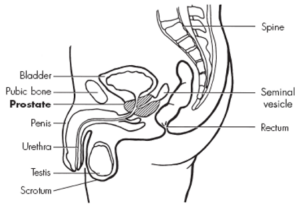
Image Copyright: Macmillan Cancer Support
What is Radiotherapy?
Radiotherapy, also known as radiation treatment, is the controlled use of high energy X-rays to treat many different types of cancer. The X-rays are produced electronically by a machine called a Linear Accelerator (Linac), and treatment usually takes 10 to 15 minutes.
Radiotherapy works by causing damage to the DNA in cancer cells in the treatment area. Although normal healthy cells are also affected, these can recover and repair themselves. Radiotherapy can be used as a primary treatment, a salvage treatment after surgery or for symptomatic control. It does not make you radioactive, and you are safe to be around people, including children, whilst you are on treatment.
Your clinical oncologist or consultant radiographer will discuss the treatment, risks and side effects with you. You will have an opportunity to ask questions. If you want to go ahead with the treatment, you will be asked to sign a consent form.
Prior to starting your treatment, you will be invited for a CT planning scan, which will take place in the radiotherapy department.
Planning your treatment
Your first appointment in the radiotherapy department will be a planning appointment. This appointment will take approximately 30 to 60 minutes; however, it can sometimes take longer depending on your bowel and bladder status. For the scan, you’ll be asked to have a comfortably full bladder and empty bowels, and you may have been given a prescription of laxatives to take for a few days before attending your scan.
A member of the radiotherapy team will talk to you before any procedure is carried out to obtain your consent for this process. Possible side effects of treatment and how they can be managed will also be discussed. A specialist X-ray machine called a CT scanner will be used to assist in planning your treatment. This machine takes images in slices whilst you lie on a couch that moves backwards and forwards through the opening of the machine, as shown in the picture below.
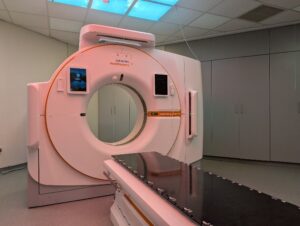
1 of the 2 Siemens CT Scanners in the Radiotherapy Department. Image taken from the Radiotherapy Department
In the CT room, you will be helped into the correct position on the treatment couch, and although we will have to loosen or remove any clothing covering your pelvis, we will ensure you are still covered.
Your clinical oncologist or consultant radiographer may have requested a special dye called contrast to be given during your CT scan. This helps to make things like blood vessels more visible on the scan. If this is the case, one of the team members will insert a cannula before your scan.
You may have already had a CT or MRI scan for diagnostic purposes; however, this scan is necessary to produce your individual treatment plan. The CT staff will confirm your treatment start date before you leave the department.
What will happen on your first day?
Please book in at the radiotherapy reception desk for each of your appointments. You will be asked to take a seat in the main waiting area or directed to a specific waiting area. On your first day, one of the radiographers will come and collect you from the waiting area and advise you to start drinking. The radiographers will not inform you to do this daily, so please adhere to the following instructions at every visit:
- Stay well hydrated in the days coming up to your CT planning scan and Radiotherapy treatments. Drink 2 litres of clear fluid such as water, cordial or juice.
- Arrive 45 minutes before your appointment time to allow enough time to fill your bladder. Empty your bladder upon arrival to the department.
- Drink 500ml of water (1 full bottle). You should have been provided with a bottle at your planning CT scan. This should be drunk over 15 minutes unless you have been informed otherwise by a member of staff.
- It takes approximately 30 minutes for the water you drink to reach your bladder; therefore, ensure you have finished your bottle of water 30 minutes before your appointment time.
- Any delays on your treatment machine will be displayed on the screens in the waiting area; this should be taken into consideration when filling your bladder. For example, if there is a 30-minute delay, start drinking your water 30 minutes later than you originally would have. However, please be aware that the patient queue is subject to change due to multiple factors.
- If you ever feel unable to hold your bladder or have any other questions, please speak with a Radiographer.
What happens during treatment?
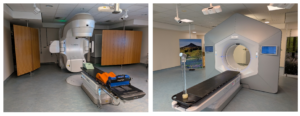
Radiotherapy is painless and takes up to 15 minutes to deliver. There are two types of Linear Accelerator (Linac) machines in this department; they look different, but they deliver treatment in the same way.
We will ask you to have a comfortably full bladder and empty bowels for each treatment. If you have been prescribed laxatives (e.g. Laxido/Movicol or Micro enema) by your clinical oncologist or consultant radiographer, please take as advised. This is very important for the accuracy of your treatment and to minimise the risk of possible side effects.
The radiographers may call you through into a side room before you go for treatment and use an ultrasound scanner to check how full your bladder is. If you do not feel like your bladder is full, please make the staff aware.
The radiographers will escort you into the treatment room and assist you into the correct treatment position on the couch, as you were for your planning appointment. Once you are in the correct position, the staff will then leave the room for a few minutes to commence treatment.
The machine is being controlled by the radiographers in the control area, which will rotate around you in different directions. These rotations cannot be seen on the Halcyon machine due to the cover around the machine. There is nothing to see or feel whilst treatment is being delivered, but you may hear a buzzing noise. The radiographers are watching you at all times on the monitors. If you need to get their attention, please raise your voice; do not move, as this can affect the delivery of treatment.
You will have regular weekly reviews with the radiographers as you progress through your treatment to assess how you are coping with any side effects. You may be referred to one of our clinical nurse specialists (CNS) if further medical advice or intervention is required.
Side effects
You may experience some side effects and reactions as you progress through your treatment. You are not guaranteed to have side effects, and every individual is different. Side effects can occur at varying levels – these are normal and temporary. You can speak with the Radiotherapy team and get reassurance and advice on how you can possibly control the side effects. In some circumstances, we may be able to prescribe medications to help with side effects.
Listed below are some of the common side effects. These typically begin ~2 to 3 weeks into treatment and can last for several weeks. Side effects tend to peak in intensity within 2 weeks after treatment, before improving quickly from then onwards. You will see your Clinical Oncologist or Consultant Radiographer around 6 weeks after your treatment has ended. By this point, side effects have usually abated.
Urinary Problems
You may experience changes to your Urinary symptoms. These can include:
- Burning/Stinging or discomfort when you pass urine, known as Cystitis.
- Passing urine more frequently, especially during the night (Nocturia).
- An increased urgency to pass urine.
- A feeling as though you are not fully emptying your bladder after passing urine.
Following the steps below may help with the above symptoms:
- Ensure that you are drinking enough fluid and increase if necessary. We would recommend that you drink 2 litres of clear fluid (water, cordial etc.) every day.
- Try to limit/avoid smoking, drinking alcohol and caffeinated drinks (i.e. tea, coffee, fizzy drinks) as these will further irritate your bladder. De-caffeinated tea and coffee is better, but these are diuretics and will still irritate your bladder to some extent.
- Drinking a glass of cranberry juice may help with Cystitis symptoms, though you should NOT do this if you are taking Warfarin.
Bowel Problems
Changes in your bowel habits/motions may occur as radiotherapy may irritate the Rectum/Bowel. These can include:
- Loose motions/Diarrhoea. This can be treated with anti-diarrhoea medication.
- Increased bowel urgency or frequency.
- The urge to want to open your bowels without passing anything or only a small stool, known as Tenesmus.
- Mucus Discharge. Having a bowel motion but only passing mucus.
- Pain in the back passage. This is caused by inflammation and is called Proctitis.
We do not recommend you alter your diet, but if you begin to experience any of the above symptoms, speak to a radiographer or nurse who will be able to advise you.
Skin Reactions
Sometimes, radiotherapy may cause skin in the treated area, groins and between the buttocks to become sore. If this happens, speak to a radiographer or nurse for advice and/or refer to the Society of Radiographers Skin Care Leaflet. Accessible via the Hull University Teaching Hospitals website – Patient Information Leaflets page.
If you suffer from Haemorrhoids, radiotherapy can irritate them. If this happens, please alert one of the radiographers or nurses rather than using over-the-counter remedies, as this can make the skin reaction worse, and they will provide you with a suitable alternative.
Fatigue/Tiredness
Some patients may experience feeling more tired than usual during treatment. This could be as a result of the treatment itself, due to having to get up several times during the night or travelling a long way for daily treatment. Try to rest when you feel the need. Energy levels should start to improve from around 6 weeks after completing treatment.
Late side-effects
With the use of modern planning techniques, there is a low chance of late side effects from happening; however, this can still occur some months or even years after completion of treatment.
Bladder
- Urinary Incontinence (with varying levels of severity).
- Increased Urinary Frequency.
- Thinning of the lining of the Bladder.
Bowels
- Diarrhoea or Increased Bowel Frequency.
- Narrowing of the Bowel (Diverticulosis).
- Bleeding from the Rectum (contact your Clinical Oncologist).
- Inflammation of the lining of the back passage (Proctitis). Contact your clinical oncologist or consultant radiographer if you need to discuss this.
Sexual Dysfunction
This may be as a result of your radiotherapy treatment, the hormone treatment, or previous Surgery. If sexual function were to return to normal, this can take anywhere from 6 to 12 months after treatment to resolve. However, if you have any questions regarding this, then please speak with your clinical oncologist or consultant radiographer.
Infertility
Most treatments for Cancer cause infertility, meaning you will no longer be able to father a child. You may wish to discuss this further with your clinical oncologist or consultant radiographer prior to radiotherapy.
What happens at the end of your treatment?
Once you have completed your treatment, you will receive a follow-up appointment in the post or via the NHS app to see your clinical oncologist or consultant radiographer at the hospital where you were previously seen. This is usually 4 to 6 weeks after treatment has finished, as this allows any side effects you have experienced to abate. Your clinical oncologist or consultant radiographer will review you and discuss the follow-up procedure after treatment.
Hormone Therapy
Hormone therapy (also referred to as Androgen Deprivation Therapy) may be given in addition to radiotherapy – this is known as adjuvant therapy. Hormones control the growth and activity of normal cells and are naturally produced in the body.
Your clinical oncologist or consultant radiographer may advise that you could benefit from hormone treatment. Hormone therapy works by either stopping testosterone from being produced or stopping testosterone from reaching cancer cells. Testosterone alone does not normally cause any problems, but if you have prostate cancer, this can accelerate cancer growth.
How is Hormone Therapy given?
Hormone therapy is usually given via injection under the skin of the abdomen (subcutaneously). It can be given as a 4-weekly injection or as a longer-acting 12-weekly injection. You will normally have these injections at your own GP practice.
What are the side effects of Hormone Therapy?
The most common side effects from Hormone Therapy are outlined below. Some men may experience side effects more than others. If you have any concerns, please either speak to your clinical oncologist, consultant radiographer or discuss with your urology clinical nurse specialist (CNS) team.
Hot Flushes
Ways to help reduce these include:
- Reducing caffeinated consumption (e.g. tea and coffee)
- Reducing alcohol and nicotine consumption.
Weight gain and Fatigue
You may notice that you gain weight, usually specifically around the abdomen. Exercise and a balanced diet can help to lessen this impact. Hormone therapy can make you feel more tired than usual; you are still fine to do your normal daily activities and drive, but may feel more lethargic. This usually returns to normal after you have completed hormone therapy.
Sexual Dysfunction
Loss of Libido (Sex drive) and Erectile Dysfunction (an inability to get an erection) can occur. Performing Pelvic Floor Exercises regularly may help to maintain this. This may return to normal after completing hormone therapy. However, you may wish to discuss this with your clinical oncologist, consultant radiographer or urology CNS team.
Skin Rashes
Some people may experience Skin Rashes. Often, swapping from one form/brand of hormone therapy to another (e.g. swapping from Zoladex Injections to Prostap Injections) can sometimes resolve this.
Breast Tenderness or Fullness
You may notice some slight breast swelling and tenderness known as Gynecomastia. If this is bothersome, then please discuss with your clinical oncologist or consultant radiographer. In rare circumstances, we may do a single, additional low-dose treatment of radiotherapy to the chest area to stop any swelling.
Osteoporosis/Sore Joints
Long-term use of hormone therapy may cause your joints and bones to weaken. If you are asked to have hormone therapy for longer than 2 years, then often you will also be given a prescription of Calcium and Vitamin D supplements to counteract this. If you would like to discuss this further, please speak with your clinical oncologist or consultant radiographer.
How long will I be on Hormone Therapy for?
Your clinical oncologist will discuss with you how long they would advise that you remain on hormone therapy for, as this can differ per person based on the information from your staging investigations (MRI/CT/Biopsy/PSA). This will usually be either 6 months, 2 years, or 3 years.
Radiotherapy Staff
Clinical Oncologist, Registrar, Consultant Therapeutic Radiographers
They are experts in radiotherapy and will be managing your treatment. They will take the responsibility for deciding what dose and how many treatments will be best for you; they will oversee the planning of your treatment. You may see them or a member of their team at your initial planning appointment, and you can see them during your treatment if you have any problems or queries.
Therapeutic Radiographers
Radiotherapy is delivered by male and female therapeutic radiographers who are specialist healthcare professionals trained to plan and deliver radiotherapy treatment and to use the specialist equipment. You will usually see the same team of radiographers, and they will assist you with any questions or problems or refer you to a more appropriate person.
Radiotherapy Support Team
The team consists of clinical nurse specialists and clinical support workers (CSW’s), who are based within the radiotherapy pepartment where they provide specialised care, actively support, and advise patients before, during and after radiotherapy treatment.
Physicists, Planning Dosimetrists and Machine Technicians
Medical physicists are specialist scientists who have a key role in the individual planning of your treatment, along with the planning technicians. They may also have an input into the arrangement of your treatment. They work together with the machine technicians to ensure that the machines are reliable and working accurately.
Students
At some point during your treatment, you may encounter student radiographers. Everything they do is supervised fully. If you would prefer our students not to be present during the planning and treatment, please let a member of staff know when you attend for your initial planning appointment.
Other members of staff
During your course of treatment, you may meet our receptionists, porters, volunteer workers. All are working together to provide you with a high-quality of healthcare.
Research
The Trust is research-active with a research strategy that includes cancer treatment and care. The radiotherapy department participates in national and international research studies to improve treatments to make them safer, more effective, and reduce side effects. We also develop patient-centred local research to improve your radiotherapy experience to benefit you and your family. We would like to encourage you to provide feedback about your experiences and ideas to help us research the areas that are important to you. Your treatment will not be affected in any way should you not want to take part.
Advice and Support Services
Please read through this leaflet and your clinic letter, share the information it contains with your partner and family (if you wish), so that they can be of help and support. There may be information they need to know, especially if they are taking care of you.
Radiotherapy Information and Support Team
Should you require further advice on the information contained in this leaflet, please do not hesitate to contact the Radiotherapy Information and Support Team on telephone number (01482) 461206
Email: hyp-tr.radiotherapy.information@nhs.net
Alternatively, contact your specialist nursing team on telephone numbers:
Hull: Tel : 01482 622178
York/Scarborough: Tel: 01723 385246
NLaG: Tel: 03033 304401
Radiotherapy Booking Office
If you need to speak to a member of staff regarding your appointments, please contact the Radiotherapy Booking Office on Tel: 01482 461187 / Tel: 01482 461188 / Tel: 01482 461189 / Tel: 01482 461225 / Tel: 01482 461138
Cancer Psychological Service
The primary aim of our psychological service is to support patients with emotional and psychological well-being during and after oncological and haematological treatment. The service is located in the Queen’s Centre at Castle Hill Hospital, HU16 5JQ.
Contact times are Monday to Friday, 8.00 am to 4.00 pm.
Tel: 01482 461060 or Tel: 01482 461061
Listed below are contact details of useful organisations that provide information about cancer including radiotherapy treatments:
Macmillan Cancer Support
Aim to provide expert information and advice on all aspects of cancer and its treatment, and on the practical and emotional aspects of living with cancer.
The Macmillan Cancer Information Centre at the Queen’s Centre is open Monday to Thursday 8.00 am to 6.00 pm. You can drop in or call on Tel: 01482 461154
For Scunthorpe and Grimsby, their opening hours are Tuesday, Wednesday and Thursday – opening hours are subject to change. Tel: 03033 305302
Alternatively, to speak to a Macmillan advisor, call the free national help line: Tel: 0808 808 0000 , available 7 days a week, 8.00 am to 8.00 pm
Online: http://www.macmillan.org.uk
PALS (Patient Advice and Liaison Service)
Provide confidential advice and support, helping you resolve any concerns you have about the service you have received.
Tel: 01482 623065 – Monday to Friday 8:30 am to 4:30 pm
Email: hyp-tr.pals.mailbox@nhs.net
Online Resources:
MacMillan: https://www.macmillan.org.uk/cancer-information-and-support/prostate-cancer
Prostate Cancer UK: https://prostatecanceruk.org/prostate-information-and-support
Infopool: https://www.theinfopool.co.uk/
General Advice and Consent
Most of your questions should have been answered by this leaflet, but remember that this is only a starting point for discussion with the healthcare team.
Consent to treatment
Before any doctor, nurse or therapist examines or treats you, they must seek your consent or permission. In order to make a decision, you need to have information from health professionals about the treatment or investigation which is being offered to you. You should always ask them more questions if you do not understand or if you want more information.
The information you receive should be about your condition, the alternatives available to you, and whether it carries risks as well as the benefits. What is important is that your consent is genuine or valid. That means:
- you must be able to give your consent
- you must be given enough information to enable you to make a decision
- you must be acting under your own free will and not under the strong influence of another person
Information about you
We collect and use your information to provide you with care and treatment. As part of your care, information about you will be shared between members of a healthcare team, some of whom you may not meet. Your information may also be used to help train staff, to check the quality of our care, to manage and plan the health service, and to help with research. Wherever possible we use anonymous data.
We may pass on relevant information to other health organisations that provide you with care. All information is treated as strictly confidential and is not given to anyone who does not need it. If you have any concerns please ask your doctor, or the person caring for you.
Under the General Data Protection Regulation and the Data Protection Act 2018 we are responsible for maintaining the confidentiality of any information we hold about you. For further information visit the following page: Confidential Information about You.
If you or your carer needs information about your health and wellbeing and about your care and treatment in a different format, such as large print, braille or audio, due to disability, impairment or sensory loss, please advise a member of staff and this can be arranged.