
- Reference Number: HEY1157/2023
- Departments: Ophthalmology Department
- Last Updated: 31 December 2023
Introduction
This leaflet has been produced to give you general information. Most of your questions should be answered by this leaflet. It is not intended to replace the discussion between you and the healthcare team, but may act as a starting point for discussion. If after reading it you have any concerns or require further explanation, please discuss this with a member of the healthcare team.
What will happen after the squint surgery?
Immediately after the operation, your child’s eye(s) may be red, swollen and may feel sore and gritty. Your child`s eye(s) may be watery and their vision may also be blurry.
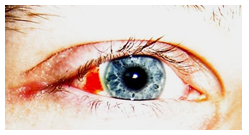
The redness will fade with time and can take up to 12 weeks to settle. Rarely the white part of the eye does not fully return to its normal colour. Eventually there is usually little visible evidence that they have had squint surgery.
The position of your child’s eye(s) may vary over the first few weeks immediately after surgery, and will take time to settle. Immediately after surgery your child may complain of occasional double vision. This should resolve quickly and it is important you encourage your child to ignore the second image and avoid looking for it.
If your child already wears glasses you should have been advised by the team that your child will need to continue to wear them as before. Your child should avoid wearing any contact lenses in the operated eye(s).
Will my child need any eye drops after the surgery?
On the day of the surgery your child will be prescribed eye drops and you will be shown how to instill these by the nursing team. You should start the drops on the day they are prescribed; usually this will be on the day of the surgery. You will need to put the drops in 3 to 6 times a day for approximately 2 to 4 weeks following the surgery or as prescribed by the surgeon. Before and after instilling the drops it is important to wash and dry your hands thoroughly to reduce the risk of infection. Please ensure you store the drops as per instructions. If you are required to use more than one set of eye drops, please ensure you leave 15 minutes between instilling each type of drop.
There will be some discharge from the eye(s) operated on. You will be shown how to effectively bathe the eye(s) in order to keep them clean and limit the risk of infection.
It is advisable to have a supply of age appropriate painkillers such as paracetamol or ibuprofen to give to your child if they are in pain. The pain usually does not last for more than a few days; however there may be some discomfort on eye movement for a little longer, particularly with repeat squint surgeries.
Try to discourage your child from rubbing their eyes as this could loosen the stitches and may increase the risk of infection. It is also important to avoid products like soap and shampoo getting into your child’s eyes as these will cause irritation and discomfort.
How long will it take to get back to normal?
Your child will benefit from extra rest for a day or two after the squint surgery. They should be able to return to school 1 to 2 weeks after surgery.
Visual activities like reading and watching television can be resumed right after the surgery unless otherwise advised by the healthcare team. Normal activity can be started again as soon as your child feels ready.
Swimming and rough sports should be avoided for four weeks.
It is important to avoid dusty and dirty environments for at least 2 weeks or until the eye has had a chance to heal fully.
Will I need to attend for follow-up appointments?
Your child will be given two post-operative appointments. It is very important to return for follow-up as advised to check on your child’s recovery.
The first appointment will be to see the orthoptist 2 to 3 days after the surgery. If you are having difficulty instilling the eye drops a nurse will be available to advise you.
The second appointment will be 2 to 3 weeks after the surgery, again to see the orthoptist. You may also see the consultant who carried out your child`s operation. In some cases a second dose of drops or ointment may be prescribed.
Your child’s post-operative appointment should already be arranged, but please ensure you are aware of the follow-up appointment before leaving the hospital on the day of discharge following squint surgery.
Should you require further advice on the issues contained in this leaflet, please do not hesitate to contact the Orthoptic Department on tel: 01482 816605.
General Advice and Consent
Most of your questions should have been answered by this leaflet, but remember that this is only a starting point for discussion with the healthcare team.
Consent to treatment
Before any doctor, nurse or therapist examines or treats your child, they must seek your consent or permission. In order to make a decision, you need to have information from health professionals about the treatment or investigation which is being offered to your child. You should always ask them more questions if you do not understand or if you want more information.
The information you receive should be about your child’s condition, the alternatives available for your child, and whether it carries risks as well as the benefits. What is important is that your consent is genuine or valid. That means:
- you must be able to give your consent
- you must be given enough information to enable you to make a decision
- you must be acting under your own free will and not under the strong influence of another person
Information about your child
We collect and use your child’s information to provide your child with care and treatment. As part of your child’s care, information about your child will be shared between members of a healthcare team, some of whom you may not meet. Your child’s information may also be used to help train staff, to check the quality of our care, to manage and plan the health service, and to help with research. Wherever possible we use anonymous data.
We may pass on relevant information to other health organisations that provide your child with care. All information is treated as strictly confidential and is not given to anyone who does not need it. If you have any concerns please ask your child’s doctor, or the person caring for your child.
Under the General Data Protection Regulation and the Data Protection Act 2018 we are responsible for maintaining the confidentiality of any information we hold about your child. For further information visit the following page: Confidential Information about You.
If you need information about your child’s (or a child you care for) health and wellbeing and their care and treatment in a different format, such as large print, braille or audio, due to disability, impairment or sensory loss, please advise a member of staff and this can be arranged.