
- Reference Number: HEY1585/2025
- Departments: Physiotherapy
- Last Updated: 30 June 2025
Following a first-time shoulder dislocation
Introduction
This leaflet has been produced to give you general information about your exercise programme following your shoulder dislocation. Most of your questions should be answered by this leaflet. It is not intended to replace the discussion between you and your therapist but may act as a starting point for discussion. If after reading it you have any concerns or require further explanation, please discuss this with a member of the healthcare team caring for you. Information on contacting us can be found at the end of this leaflet.
Moving Your Shoulder
The exercises on the next pages will help you get your shoulder moving. It is not unusual to experience some discomfort when you start the shoulder exercises, especially in the early days. If this is the case, we advise that you regularly take simple pain relief, which can be bought over the counter. If you have allergies or conditions which prevent the use of pain- relieving or anti-inflammatory medication, please seek advice from your doctor or a pharmacist.
Following the exercises any discomfort should settle quickly, if not then you may be doing too much, so reduce your repetitions and then gradually build up again as your symptoms allow. To help you keep track of what you have done there are pages at the end of this section to record your goals and how many and how often you do these exercises.
When performing the exercises try not to hitch / shrug your shoulder girdle up towards your ear. If this is happening, then the exercise maybe too difficult and you would be better to start with the supported stick exercises first before progressing to the unsupported exercises. Only move onto the next section “Strengthening Your Shoulder” once you are comfortable in performing all the exercises in this section. (pages 2,3 and 4)
Part One – Moving Your Shoulder
Exercise 1
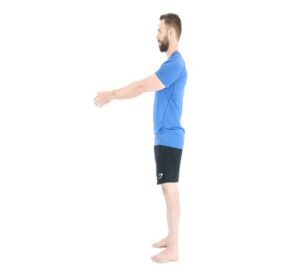
Standing with your arm by your side.
Move your arm forwards and upwards as far as pain allows.
Return your arm back down to your side. Repeat little and often as pain allows.
For example, you can perform 10 repetitions of this exercise 3 times a day.
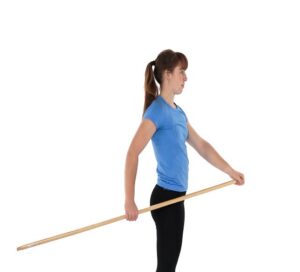
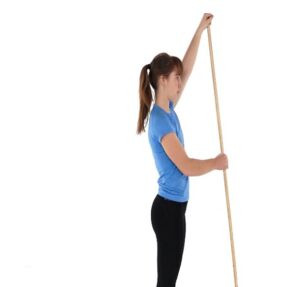
If this is too difficult and you feel you are hitching your shoulder, you can use your unaffected arm or a stick to help support your affected arm during the forward movement. (Please refer to the picture below).
Exercise 2
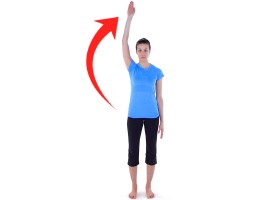
Stand with your arm by your side.
Move your arm out to the side (facing slightly in front) as far as pain allows.
Repeat little and often. For example, you can perform 10 repetitions of this exercise 3 times a day.
If moving your arm out to the side is too difficult and you feel you are hitching your shoulder, you can use a stick to help support your affected arm during the movement (please refer to the picture below).
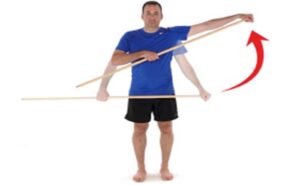
Exercise 3

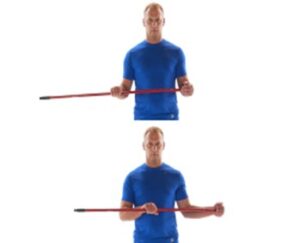
Bend your elbows to 90 degrees (picture on top)
Keeping your elbows tight to your side, rotate your forearms outwards (no more than 90 degrees) as per the picture at the bottom.
Then move them back to the starting position.
Repeat little and often as pain allows. For example, you can perform 10 repetitions of this exercise 3 times a day.
If this movement is too difficult you can use a stick to help support your affected arm during the movement. Please refer to the picture below.
My goals
In this section, please write down your goals for:
- This early phase of rehabilitation.
An example might be, to be able to brush your hair or reach into a cupboard.
- The later stages of rehabilitation, (6 weeks or more after your injury).
For example, to be able to lift your child or lift bags of shopping.
It is important that your goals are personal to you, and you acknowledge when you have achieved it. Also make sure your goals are SMART!
Early-stage goals:
——————————————————————————————————————————————————————————————————————————–
Late-stage goals:
———————————————————————————————————————————————————————————————————————————————————————————————————————————————–
S – SPECIFIC: Clear definition of the what, why and how.
M – MEASUREABLE: Evidence that you have achieved the goal.
A – ACHIEVABLE: Agreed and attainable.
R – RELEVANT: Relevant to you
T – TIME-BOUND: Each goal should have a time frame.
Record of Progress
In this section, please keep a record of the exercises you have done. Once you are comfortable moving your arm you can progress to the exercises on the next pages that will begin to strengthen your shoulder.
For Example:
| Exercises / Repetitions | |||||
| Date of exercises completed | Exercise 1 | Total number completed | Exercise 2 | Total number completed | Exercise 3 |
| 29/8/2024 | YES / NO | 10,10,5 | YES / NO | 6,7,9 | YES / NO |
| 30/8/2024 | YES / NO | 7,6,5 | YES / NO | – | YES / NO |
| 31/8/2024 | YES / NO | 10,10,10 | YES / NO | 10, 5,10 | YES / NO |
| Exercises / Repetitions | ||||||
| Date of Exercises Completed | Exercise 1
|
Total number completed | Exercise 2 | Total number completed | Exercise 3 | Total number completed |
| YES / NO | YES / NO | YES / NO | ||||
| YES / NO | YES / NO | YES / NO | ||||
| YES / NO | YES / NO | YES / NO | ||||
| YES / NO | YES / NO | YES / NO | ||||
| YES / NO | YES / NO | YES / NO | ||||
| YES / NO | YES / NO | YES / NO | ||||
| YES / NO | YES / NO | YES / NO | ||||
| YES / NO | YES / NO | YES / NO | ||||
| YES / NO | YES / NO | YES / NO | ||||
| YES / NO | YES / NO | YES / NO | ||||
| YES / NO | YES / NO | YES / NO | ||||
| YES / NO | YES / NO | YES / NO | ||||
| YES / NO | YES / NO | YES / NO | ||||
| YES / NO | YES / NO | YES / NO | ||||
| YES / NO | YES / NO | YES / NO | ||||
| YES / NO | YES / NO | YES / NO | ||||
| YES / NO | YES / NO | YES / NO | ||||
| YES / NO | YES / NO | YES / NO | ||||
| YES / NO | YES / NO | YES / NO | ||||
| YES / NO | YES / NO | YES / NO | ||||
| YES / NO | YES / NO | YES / NO | ||||
| YES / NO | YES / NO | YES / NO | ||||
| YES / NO | YES / NO | YES / NO | ||||
| YES / NO | YES / NO | YES / NO | ||||
| YES / NO | YES / NO | YES / NO | ||||
| YES / NO | YES / NO | YES / NO | ||||
| YES / NO | YES / NO | YES / NO | ||||
| YES / NO | YES / NO | YES / NO | ||||
| YES / NO | YES / NO | YES / NO | ||||
| Exercises / Repetitions | ||||||
| Date of Exercises Completed | Exercise 1
|
Total number completed | Exercise 2 | Total number completed | Exercise 3 | Total number completed |
| YES / NO | YES / NO | YES / NO | ||||
| YES / NO | YES / NO | YES / NO | ||||
| YES / NO | YES / NO | YES / NO | ||||
| YES / NO | YES / NO | YES / NO | ||||
| YES / NO | YES / NO | YES / NO | ||||
| YES / NO | YES / NO | YES / NO | ||||
| YES / NO | YES / NO | YES / NO | ||||
| YES / NO | YES / NO | YES / NO | ||||
| YES / NO | YES / NO | YES / NO | ||||
| YES / NO | YES / NO | YES / NO | ||||
| YES / NO | YES / NO | YES / NO | ||||
| YES / NO | YES / NO | YES / NO | ||||
| YES / NO | YES / NO | YES / NO | ||||
| YES / NO | YES / NO | YES / NO | ||||
| YES / NO | YES / NO | YES / NO | ||||
| YES / NO | YES / NO | YES / NO | ||||
| YES / NO | YES / NO | YES / NO | ||||
| YES / NO | YES / NO | YES / NO | ||||
| YES / NO | YES / NO | YES / NO | ||||
| YES / NO | YES / NO | YES / NO | ||||
| YES / NO | YES / NO | YES / NO | ||||
| YES / NO | YES / NO | YES / NO | ||||
| YES / NO | YES / NO | YES / NO | ||||
| YES / NO | YES / NO | YES / NO | ||||
| YES / NO | YES / NO | YES / NO | ||||
| YES / NO | YES / NO | YES / NO | ||||
| YES / NO | YES / NO | YES / NO | ||||
| YES / NO | YES / NO | YES / NO | ||||
| YES / NO | YES / NO | YES / NO | ||||
Start Strengthening Your Shoulder
Only move onto these exercises once you are comfortable with completing all the exercises from the previous section.
These next exercises will help you start getting your shoulder stronger. To help you keep track of what you have done there are pages at the end of this section to record how many and how often you do these exercises. You should be able to complete the next three exercises (pages 8, 9, and 10) comfortably before moving onto more dynamic strengthening exercises (pages 10 and 11)
Part Two – Strengthening Your Shoulder
Exercise 4
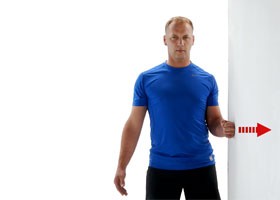
Bend your elbow to 90 degrees and place your hand against the edge of a wall / doorway. Attempt to push the back of your hand into the wall. Your arm should not move, but your muscles will contract. Remember to keep your elbow by your side. Hold for 5 seconds.
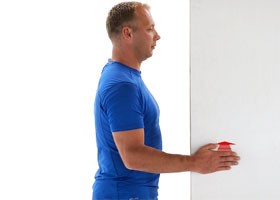
Repeat in the opposite direction by attempting to move your arm inwards towards the edge of the door / wall, by pushing through your hand. Hold for 5 seconds.
Repeat little and often as pain allows. For example, you can perform 10 repetitions of this exercise 3 times a day.
Exercise 5
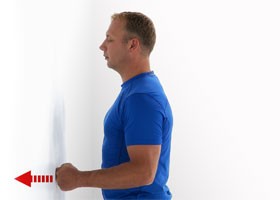
Stand up and bend your elbow to 90 degrees and facing a wall. Push your fist forwards into the wall. Your arm should not move, but your muscles will contract. Hold for 5 seconds.

Repeat with your back to the wall pushing your arm backwards into the wall for 5 seconds.
Repeat little and often as pain allows. For example, you can perform 10 repetitions of this exercise 3 times a day.
Exercise 6
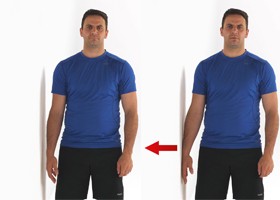
With your arm straight stand next to a wall and push your arm sideways into the wall. Hold for 5 seconds.
Repeat little and often as pain allows. For example, you can perform 10 repetitions of this exercise 3 times per day.
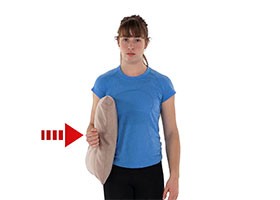
Now repeat in the opposite direction, put a pillow or cushion against your side and with your elbow bent, push your arm into the pillow. Hold for 5 seconds.
Repeat little and often as pain allows. For example, you can perform 10 repetitions of this exercise 3 times a day.
Only move onto the following exercises once comfortable with completing the exercises on pages 8, 9 and 10.
Exercise 7
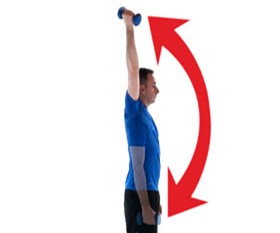
Stand up and put your arm by your side.
Holding a tin of beans (or equivalent) lift your arm forwards and back down in a slow and controlled manner.
Repeat little and often as pain allows. For example, you can perform 10 repetitions of this exercise 3 times a day.
To make the exercise more difficult progressively increase the weight (you can use heavier tins / bottles) and gradually increase the number of repetitions.
Exercise 8
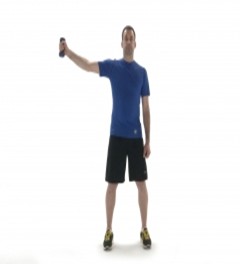
Stand up and put your arm by your side.
Holding a tin of beans (or equivalent) lift your arm out to the side and then return it back down to your side.
Repeat little and often as pain allows. For example, you can perform 10 repetitions of this exercise 3 times a day.
To make the exercise more difficult progressively increase the weight (you can use heavier tins / bottles) and gradually increase the number of repetitions.
Exercise 9
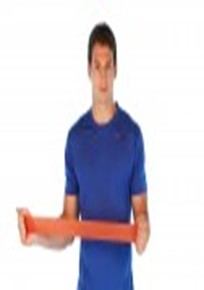
Put your arm by your side, bend your elbow to 90 degrees and hold the resistance band in both hands.
Whilst keeping your elbows tight to your sides pull the yellow band outwards on your effected side by rotating your forearm.
Then slowly release the tension in the band by move your arm slowly back to the starting position.
Repeat little and often as pain allows. For example, you can perform 10 repetitions of this exercise 3 times a day.
To make the exercise more difficult gradually increase the number of repetitions and them move onto the red band which will offer more resistance.
All photos with kind permission of ©Physiotec™
Record of Progress
| Exercises / Repetitions | ||||||
| Date of Exercises Completed | Exercise 4
|
Total number completed | Exercise 5 | Total number completed | Exercise 6 | Total number completed |
| YES / NO | YES / NO | YES / NO | ||||
| YES / NO | YES / NO | YES / NO | ||||
| YES / NO | YES / NO | YES / NO | ||||
| YES / NO | YES / NO | YES / NO | ||||
| YES / NO | YES / NO | YES / NO | ||||
| YES / NO | YES / NO | YES / NO | ||||
| YES / NO | YES / NO | YES / NO | ||||
| YES / NO | YES / NO | YES / NO | ||||
| YES / NO | YES / NO | YES / NO | ||||
| YES / NO | YES / NO | YES / NO | ||||
| YES / NO | YES / NO | YES / NO | ||||
| YES / NO | YES / NO | YES / NO | ||||
| YES / NO | YES / NO | YES / NO | ||||
| YES / NO | YES / NO | YES / NO | ||||
| YES / NO | YES / NO | YES / NO | ||||
| YES / NO | YES / NO | YES / NO | ||||
| YES / NO | YES / NO | YES / NO | ||||
| YES / NO | YES / NO | YES / NO | ||||
| YES / NO | YES / NO | YES / NO | ||||
| YES / NO | YES / NO | YES / NO | ||||
| YES / NO | YES / NO | YES / NO | ||||
| YES / NO | YES / NO | YES / NO | ||||
| YES / NO | YES / NO | YES / NO | ||||
| YES / NO | YES / NO | YES / NO | ||||
| YES / NO | YES / NO | YES / NO | ||||
| YES / NO | YES / NO | YES / NO | ||||
|
Exercises / Repetitions |
||||||
| Date of Exercises Completed | Exercise 4
|
Total number completed | Exercise 5 | Total number completed | Exercise 6 | Total number completed |
| YES / NO | YES / NO | YES / NO | ||||
| YES / NO | YES / NO | YES / NO | ||||
| YES / NO | YES / NO | YES / NO | ||||
| YES / NO | YES / NO | YES / NO | ||||
| YES / NO | YES / NO | YES / NO | ||||
| YES / NO | YES / NO | YES / NO | ||||
| YES / NO | YES / NO | YES / NO | ||||
| YES / NO | YES / NO | YES / NO | ||||
| YES / NO | YES / NO | YES / NO | ||||
| YES / NO | YES / NO | YES / NO | ||||
| YES / NO | YES / NO | YES / NO | ||||
| YES / NO | YES / NO | YES / NO | ||||
| YES / NO | YES / NO | YES / NO | ||||
| YES / NO | YES / NO | YES / NO | ||||
| YES / NO | YES / NO | YES / NO | ||||
| YES / NO | YES / NO | YES / NO | ||||
| YES / NO | YES / NO | YES / NO | ||||
| YES / NO | YES / NO | YES / NO | ||||
| YES / NO | YES / NO | YES / NO | ||||
| YES / NO | YES / NO | YES / NO | ||||
| YES / NO | YES / NO | YES / NO | ||||
| YES / NO | YES / NO | YES / NO | ||||
| YES / NO | YES / NO | YES / NO | ||||
| YES / NO | YES / NO | YES / NO | ||||
| YES / NO | YES / NO | YES / NO | ||||
| YES / NO | YES / NO | YES / NO | ||||
| YES / NO | YES / NO | YES / NO | ||||
| YES / NO | YES / NO | YES / NO | ||||
| YES / NO | YES / NO | YES / NO | ||||
| Exercises / Repetitions | ||||||
| Date of Exercises Completed | Exercise 7
|
Total number completed | Exercise 8 | Total number completed | Exercise 9 | Total number completed |
| YES / NO | YES / NO | YES / NO | ||||
| YES / NO | YES / NO | YES / NO | ||||
| YES / NO | YES / NO | YES / NO | ||||
| YES / NO | YES / NO | YES / NO | ||||
| YES / NO | YES / NO | YES / NO | ||||
| YES / NO | YES / NO | YES / NO | ||||
| YES / NO | YES / NO | YES / NO | ||||
| YES / NO | YES / NO | YES / NO | ||||
| YES / NO | YES / NO | YES / NO | ||||
| YES / NO | YES / NO | YES / NO | ||||
| YES / NO | YES / NO | YES / NO | ||||
| YES / NO | YES / NO | YES / NO | ||||
| YES / NO | YES / NO | YES / NO | ||||
| YES / NO | YES / NO | YES / NO | ||||
| YES / NO | YES / NO | YES / NO | ||||
| YES / NO | YES / NO | YES / NO | ||||
| YES / NO | YES / NO | YES / NO | ||||
| YES / NO | YES / NO | YES / NO | ||||
| YES / NO | YES / NO | YES / NO | ||||
| YES / NO | YES / NO | YES / NO | ||||
| YES / NO | YES / NO | YES / NO | ||||
| YES / NO | YES / NO | YES / NO | ||||
| YES / NO | YES / NO | YES / NO | ||||
| YES / NO | YES / NO | YES / NO | ||||
| YES / NO | YES / NO | YES / NO | ||||
| YES / NO | YES / NO | YES / NO | ||||
| YES / NO | YES / NO | YES / NO | ||||
| YES / NO | YES / NO | YES / NO | ||||
| YES / NO | YES / NO | YES / NO | ||||
| Exercises / Repetitions | ||||||
| Date of Exercises Completed | Exercise 7
|
Total number completed | Exercise 8 | Total number completed | Exercise 9 | Total number completed |
| YES / NO | YES / NO | YES / NO | ||||
| YES / NO | YES / NO | YES / NO | ||||
| YES / NO | YES / NO | YES / NO | ||||
| YES / NO | YES / NO | YES / NO | ||||
| YES / NO | YES / NO | YES / NO | ||||
| YES / NO | YES / NO | YES / NO | ||||
| YES / NO | YES / NO | YES / NO | ||||
| YES / NO | YES / NO | YES / NO | ||||
| YES / NO | YES / NO | YES / NO | ||||
| YES / NO | YES / NO | YES / NO | ||||
| YES / NO | YES / NO | YES / NO | ||||
| YES / NO | YES / NO | YES / NO | ||||
| YES / NO | YES / NO | YES / NO | ||||
| YES / NO | YES / NO | YES / NO | ||||
| YES / NO | YES / NO | YES / NO | ||||
| YES / NO | YES / NO | YES / NO | ||||
| YES / NO | YES / NO | YES / NO | ||||
| YES / NO | YES / NO | YES / NO | ||||
| YES / NO | YES / NO | YES / NO | ||||
| YES / NO | YES / NO | YES / NO | ||||
| YES / NO | YES / NO | YES / NO | ||||
| YES / NO | YES / NO | YES / NO | ||||
| YES / NO | YES / NO | YES / NO | ||||
| YES / NO | YES / NO | YES / NO | ||||
| YES / NO | YES / NO | YES / NO | ||||
| YES / NO | YES / NO | YES / NO | ||||
What to do next
Following your initial physiotherapy session, we hope you will have been provided with enough information to continue with your rehabilitation at home, but further appointments can be made if required via our Patient-initiated follow-up.
What is a Patient-Initiated Follow-Up (PIFU) pathway?
A patient-initiated follow-up (PIFU) means that we will not routinely book you an appointment, instead we are putting you in control of making your own appointments at a time when you need them most, within a given timeframe.
How does PIFU work?
You will have been identified by your healthcare professional that a PIFU pathway is suitable for you. You will then have access to the PIFU pathway for a period of time, which will be confirmed by your healthcare team. If you require an appointment within this time frame, you can contact the Physiotherapy department, explain that you are on a PIFU pathway and need to be seen, and a suitable appointment will be made with a Physiotherapist. Your appointment may be on the telephone, a video call or face-to-face if the Physiotherapist needs to see you in person.
When should I call for a PIFU?
You can call to make an appointment if you:
- have not regained your normal shoulder range of movement by 6 weeks post injury.
- have pain that has not resolved by 12 weeks following your dislocation.
- continue to have feelings of shoulder instability that has not improved by 12 weeks.
- have struggled to return to your previous level of function (day to day or sports specific)
Please note, you can only initiate a PIFU appointment for the specific injury/condition you were originally referred to the Physiotherapy service for.
When should I not use PIFU?
- If your concern is related to different injury/condition
- If the specified time period has lapsed, please contact your GP.
- If you need urgent medical advice, you should contact your GP or NHS111.
What if I don’t need a PIFU follow-up appointment?
You do not have to arrange an appointment if you feel it is not required. If you don’t contact us to book an appointment within the specified timeframe, the PIFU will expire, and you will be discharged back to the care of your GP. We will not contact you to book a PIFU appointment – it must be initiated by you.
| Booking a PIFU follow up appointment:
· Call the Physiotherapy department on tel: 01482 674880 (Monday to Friday 8am to 4pm – excluding bank holidays) · State you are on a PIFU pathway and require an appointment. · Agree an appointment date and time. · Attend your telephone, video, or face-to-face appointment. You or your parent/guardian can make an appointment to see us if you have any concerns related to your specific injury/condition until: Date: |
Should you require further advice on the issues contained in this leaflet, please do not hesitate to contact the Physiotherapy Department on telephone: tel: 01482 608939.
Your feedback matters to us…
To ensure we deliver a safe and quality service and to help us understand the experience you have of the care you receive from our staff we would value your thoughts about the service you received.
You may be contacted as part of our quality assurance programme which is where we visit our teams and staff and talk to them about the care they provide to our patients or at any time during or after you have needed our services.
To collect this feedback, we would contact you using the registered telephone number we hold in your care record. This feedback will be strictly anonymous and whilst we will share the feedback as part of the process, we will not share any details which may identify you.
We will never ask you any personal questions about your health during these telephone calls.
If you do not wish to speak to us, please say this when we call, we do not want you to feel pressured.
This leaflet is an adaptation of the ARTISAN Trial physiotherapy booklets (R. Kearney et al 2024) and was produced by the Physiotherapy Department, Hull University Teaching Hospitals NHS Trust and will be reviewed in June 2028
General Advice and Consent
Most of your questions should have been answered by this leaflet, but remember that this is only a starting point for discussion with the healthcare team.
Consent to treatment
Before any doctor, nurse or therapist examines or treats you, they must seek your consent or permission. In order to make a decision, you need to have information from health professionals about the treatment or investigation which is being offered to you. You should always ask them more questions if you do not understand or if you want more information.
The information you receive should be about your condition, the alternatives available to you, and whether it carries risks as well as the benefits. What is important is that your consent is genuine or valid. That means:
- you must be able to give your consent
- you must be given enough information to enable you to make a decision
- you must be acting under your own free will and not under the strong influence of another person
Information about you
We collect and use your information to provide you with care and treatment. As part of your care, information about you will be shared between members of a healthcare team, some of whom you may not meet. Your information may also be used to help train staff, to check the quality of our care, to manage and plan the health service, and to help with research. Wherever possible we use anonymous data.
We may pass on relevant information to other health organisations that provide you with care. All information is treated as strictly confidential and is not given to anyone who does not need it. If you have any concerns please ask your doctor, or the person caring for you.
Under the General Data Protection Regulation and the Data Protection Act 2018 we are responsible for maintaining the confidentiality of any information we hold about you. For further information visit the following page: Confidential Information about You.
If you or your carer needs information about your health and wellbeing and about your care and treatment in a different format, such as large print, braille or audio, due to disability, impairment or sensory loss, please advise a member of staff and this can be arranged.