
- Reference Number: HEY1667/2026
- Departments: Breast Services
- Last Updated: 30 September 2026
Purpose of this guide
This leaflet provides essential information to prepare you for your breast surgery under general anaesthetic, your hospital stay, fasting guidelines, and how to recover safely at home. Please keep it for reference.
What is a General Anaesthetic?
A general anaesthetic is a state of controlled, temporary unconsciousness administered by a specialist anaesthetist. You will be fully asleep, unaware of your surroundings, and free from pain throughout the operation. The anaesthetic medication is given through an intravenous cannula (drip in your vein) and takes effect within a minute or two. Your anaesthetist monitors your vital signs continuously throughout your surgery and gives you pain relief before you wake.
Pre Operative Procedures
| Ultrasound Localiser Marker (Pintuition) | Preparation for Sentinel Lymph Node Biopsy |
| If your breast lump is small or deep within tissue, you may attend the Breast Care Unit for an appointment before surgery to place a tiny magnetic marker seed (Pintuition®).
This surgical steel seed acts as a precision map. In theatre, your surgeon uses mammogram images and a magnetic detection probe to pinpoint and remove the exact tissue along with the seed. |
Breast cancer treatment often includes removing one or more lymph nodes from the armpit (axilla) for laboratory analysis to check for cancer cells.
If a sentinel lymph node biopsy is required, you will have a visit to the Nuclear Medicine department before your surgery. Your surgeon and Macmillan Breast Care Nurse will explain this procedure in detail and provide you with a dedicated leaflet, also available on the hospital website: https://www.hull.nhs.uk |
Fasting Before Surgery
| Important Safety Notice: You MUST follow these fasting instructions strictly. Having food or fluid in your stomach during anaesthesia can cause life-threatening lung complications. Failure to follow these instructions will result in your surgery being cancelled. |
| Morning Admission | Afternoon Admission |
| Food: Eat normally the day before. No food after midnight.
Clear fluids: You may drink clear fluids up until 6:00am on the morning of surgery. We encourage you to drink 500ml of clear fluids before 6:00am. Medication: Take usual permitted medicines before 6:00am with a glass of water. |
Food: A light breakfast (e.g. toast or cereal) finished before 7:00am on surgery morning. No food after 7:00am.
Clear fluids: You may drink clear fluids freely between 7:00am and 11:00am. No drinks after 11:00am. Medication: Take permitted medicines before 11:00am with a glass of water. |
Permitted Clear Fluids: Only drink water, black tea, black coffee, herbal teas, clear diluted squash.
Strictly prohibited on the day of surgery: Do not drink milk or milky drinks, fruit juices, fizzy drinks, alcohol, chewing gum, boiled sweets, smoking, and vaping.
What to Bring to Hospital
| Essential Items | Personal Comfort and Aids |
| Medications: All regular medicines in their original boxes with prescription labels.
Clothing: Loose, comfortable clothes to travel home in (front-fastening tops, cardigans, or hoodies). Footwear: Slippers or indoor shoes that fit well with enclosed heels (not backless/mules). Dressing gown: Warm robe for walking to theatre, the hospital provides a simple cover up gown. |
Walking and Sensory Aids: Walking aids, reading glasses, and hearing aids with storage cases.
Passing the time: A book, magazine, mobile phone, tablet, or kindle device (fully charged devices, with charger and earphones; set devices to silent).
|
Hygiene, Jewellery and Valuables
- Bathing: Take a shower or bath and wash your hair the evening before or morning of admission.
- Cosmetics and Nails: Do not apply make-up, body lotion, or perfume. All nail varnish, gel polish, and acrylic or false nails must be removed beforehand so staff can monitor your vital signs.
- Jewellery and Piercings: Remove all jewellery. All body piercings must be removed or swapped to non-metallic silicone. Rings that cannot be removed will be covered with tape by the nurse.
- Valuables: Please leave jewellery and large amounts of cash at home. The Trust cannot accept responsibility for personal belongings; you will be asked to sign a disclaimer on admission to hospital.
Hospital Stay and Ward Information
| Day Surgery Centre | Ward 16 |
| Location: Entrance 2, Castle Hill Hospital
No waiting area facilities exist for relatives/friends in the Day Centre. Visitors are welcome to use hospital cafes during your admission time. |
Location: Entrance 2, Castle Hill Hospital
Please nominate one relative / friend to telephone for condition updates and pass messages to other family members / friends. |
| Ward 16 | Details and Guidelines |
| Visiting Times | 11:00am to 8:00pm daily. One escort may stay up to 30 minutes on arrival while you get settled. Maximum 2 visitors per bedside at any time. Children under 16 must be accompanied by an adult; children under 12 require approval from the sister/nurse in charge. |
| Ward Privacy | Ward 16 is a mixed ward with dedicated segregated areas. Most patients have individual rooms. You may request a chaperone at any time during treatment or examinations. |
| Infection Control | No flowers: Flowers and plants are strictly prohibited on the ward to protect against infection. |
| Smoking and Vaping | The hospital is strictly smoke-free. Leaving grounds to smoke requires signing an admission disclaimer. Vaping is prohibited indoors and strongly discouraged before and after surgery. Nicotine constricts blood vessels and impairs wound healing. |
Immediate Post-Operative Care, Discharge and Safe Travel Home
After surgery, you will wake in the recovery unit before returning to Ward 16 or the Day Surgery Centre. Nurses will monitor your blood pressure, pain, dressings, and check that you can eat, drink, and pass urine before going home (typically 3 to 4 hours after minor operations).
| 24-Hour Anaesthetic Safety Requirements:
Responsible Adult: You MUST arrange for a responsible adult (aged 18 or over) to collect you and stay with you for the first 24 hours at home. Surgery may be cancelled if this is not in place. No Public Transport: You cannot travel home by bus or train after general anaesthesia. Travel by car or taxi with an accompanying adult. For 24 hours post-anaesthetic: Do NOT drive or ride a bicycle; do NOT operate machinery, cookers, or appliances; do NOT drink alcohol; do NOT sign legal documents. |
Managing Common Post Surgery Symptoms
| Symptom | What to Expect and How to Manage It |
| General Anaesthetic Effects | Tiredness, low energy, mild nausea, dizziness, or a dry, sore throat (from breathing tubes). These resolve over a few days. Rest well and drink plenty of water. |
| Pain and Soreness | Take regular paracetamol and/or ibuprofen as directed. Stronger painkillers (codeine) can be purchased at a pharmacy; please note that codeine can cause constipation, drowsiness, and nausea. |
| Bruising and Swelling | Mild-to-moderate swelling and discoloration are a normal part of healing and common around the breast, chest wall, and armpit; typically settles in 6 to 8 weeks. Support your body with extra pillows when sitting or resting. |
| Fluid Collection (Seroma) | A soft fluid collection under the skin is common, especially after drain removal or lymph node surgery. The body usually reabsorbs this naturally. If swelling is increasing or the area becomes tight, painful, or warm, contact the Breast Clinic for assessment and possible drainage. |
| Altered Sensation and Cording | Tingling, numbness, or tightness in the armpit or arm is normal. If you notice a tight cord-like band under your armpit (“cording”) that restricts movement, gentle arm exercises and massage will help stretch it. If symptoms persist or become problematic, report them to the Breast clinic team. |
Preventing Blood Clots (Venous Thromboembolism – VTE)
A blood clot in a deep vein (usually in the leg) is known as Deep Vein Thrombosis (DVT). If a fragment breaks away and travels to the lungs, it is called a Pulmonary Embolism (PE), which is a serious medical emergency. Surgery and reduced mobility temporarily increase your clotting risk.
| Anti-Embolism Compression Stockings | Anti-Coagulation Medications |
| ● You will be measured for snug-fitting surgical, compression stockings that promote venous leg blood flow.
● Wear them continuously during your hospital stay and at home as advised. ● Stockings can be machine washed (wash at 40°C, tumble dry below 121°C). ● When removed for washing or skin checks, keep stockings off for no longer than 30 minutes. ● Ensure stockings do not roll down, bunch, or wrinkle, as this restricts circulation. |
● Some patients are prescribed daily injections (low molecular weight heparin) or tablets to reduce DVT risk.
● Heparin is derived from porcine (pig) sources. Non-porcine alternatives are available if preferred for religious or personal reasons. ● Ward staff will teach you or a relative how to administer the injection, or a community Nurse will be arranged. ● Dispose of used needles in the supplied yellow sharps bin. Return it to hospital or contact your local council for hazardous collection: ● Hull City Council: Tel: 01482 300300 ● East Riding of Yorkshire: Tel: 01482 393939 |
| Urgent VTE Signs – Act Immediately:
Suspected Deep Vein Thrombosis: If your calf becomes swollen, red, hot, or painful, remove your stocking, elevate the leg on a footstool, and call the Breast clinic ((01482) 622679), your GP, or NHS 111. Suspected Pulmonary Embolism: If you experience sudden breathlessness, chest pain, or cough up blood, seek immediate emergency help: call 999 or attend the nearest Emergency Department. Anti Coagulation Medication complications: Report excessive unexplained bruising or black tarry stools immediately. Call your GP, or NHS 111. |
Surgical Drains
Some operations require a temporary plastic drainage tube attached to a vacuum bottle or bag to collect fluid from the surgery site. This helps prevent internal fluid collections and promotes healing.
| Looking After a Drain at Home
● Keep the bottle lower than your wound so gravity and suction work efficiently. ● Make sure both clamps on the tubing are open (unclamped) unless told otherwise. ● Check that the tubing has no twists, kinks, or bends. ● Keep the bottle upright on the floor or surface so it does not lose its vacuum. ● Measure and write down the amount of fluid in the bottle at the same time every day on your chart. ● You can move around and go outdoors with a drain, but do not drive. ● Drains are usually removed when output falls to 50ml or less in a 24-hour period (or as specified by your surgeon). Call the Breast Clinic on Tel: 01482 622679 to book an appointment for drain removal, or Ward 16 on weekends Tel: 01482 468616. |
J-Vac Drain (Emptying, Re-vacuuming and Recording drainage)
Step 1 (Hygiene and Opening): Wash and dry your hands thoroughly for 20 seconds. Use a clean surface. Open the drain outlet stopper. The bag will expand; pour contents into your measuring jug.
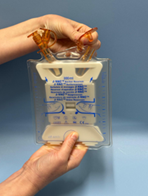
Step 2 (Compress Plates): Hold the drain with thumbs and fingers around the centre white plates. Squeeze firmly together until you hear an audible click.
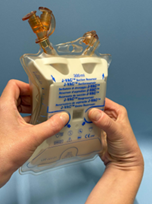
Step 3 (Re-seal): With plates squeezed, firmly close the outlet stopper plug.
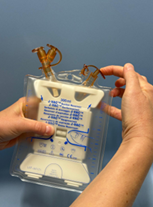
Step 4 (Re-vacuum): Hold the drain in one hand and pull the bottom paddle towards you until it pops and creates suction. Without this step, the drain will not function.
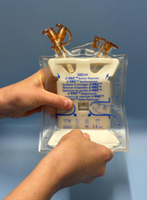
Step 5 (Record and Clean): Record fluid volume in your chart below. Flush fluid down the toilet, wash jug with hot soapy water, and wash your hands.
Redivac Drain (Recording drainage)
Step 1 – Stand the drain bottle on a level surface and mark the bottle volume with a line.
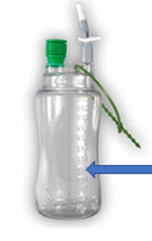
Step 2 – Record the volume measured on the chart below.
Step 3 – Check the green suction indicator at the top of the bottle. The compressed concertina indicates suction is active. If the concertina pops up (expands) please call the breast clinic to report.
24 Hour Drain Volume Record Chart
| Day | 1 | 2 | 3 | 4 | 5 | 6 | 7
|
| Output (ml) |
| Day | 8 | 9 | 10 | 11 | 12 | 13 | 14
|
| Output (ml) |
Post Surgery Bra, Prosthesis and Hygiene
| Support Bra and Softie Prosthesis | Underarm Hygiene and Deodorant |
| Wear a soft, non-wired support bra (front-fastening is easiest). Avoid underwires.
If you had a mastectomy, you will be provided with a soft, washable temporary prosthesis (“softie”) to wear inside your bra.
An appointment will be arranged 6 to 8 weeks after surgery once your wound has completely healed for a prosthesis fitting. |
If your incision is near the armpit, do not apply deodorant directly onto the wound until healed.
Once healed, you may use an unperfumed roll-on or stick deodorant above and below the scar. Avoid spray deodorants.
Patch-test any new product on your forearm first to ensure your skin does not react. |
Arm and Shoulder Exercises
Gentle arm exercises prevent shoulder stiffness, preserve arm mobility, and treat cording. Start your prescribed post-operative exercise routine the day after surgery, practicing 2 to 3 times daily. Exercises should feel comfortable; if an exercise causes sharp pain, pause for a day before gently resuming. If symptoms persist, seek guidance from the breast clinic nurse team.
Activity, Work, Driving and Emotional Health
Daily Activities: Avoid heavy housework (vacuuming, ironing, lifting full kettles), carrying heavy bags, and reaching overhead for the first 2 weeks. Gradually increase activities as comfort allows.
Returning to Work: For desk or office work, 2 to 4 weeks absence is typical. For physically demanding jobs involving heavy lifting, 4 to 8 weeks may be needed. The ward will provide a ‘fit note’ (medical certificate).
Driving: You must not drive for at least 24 hours after anaesthesia, and generally we recommend avoiding driving for the first 2 weeks. You must be able to perform all driving manoeuvres including an emergency stop without pain. Always check with your motor insurer for specific conditions of insurance cover following breast surgery.
Emotional and Psychological Support: It is normal to feel emotionally drained, tearful, or anxious after breast surgery. Support is available through your Macmillan Breast Care Nurse team and the Oncology Health Centre at Castle Hill Hospital.
Wound and Dressing Care
Stitches: Most breast operations use dissolving (absorbable) stitches placed beneath the skin, which do not need removal. Your surgical team will confirm before discharge.
Dressings: Keep your surgical wound clean and completely dry. Leave it in place until your scheduled clinic check or follow the specific removal date provided by your nursing team.
Hygiene: You may take a shallow bath or shower while keeping your dressing covered and protected from water, unless advised otherwise. Pat the area dry gently with a clean towel. Some dressings have a shower resistant film. Your surgical team will confirm before discharge.
| Warning Symptoms – When to Contact Us / Seek Health Care Professional Guidance
If you develop any of the following symptoms contact the Breast Clinic Nurse team / Ward 16: ● Increasing breast or chest wall swelling ● Infection signs: spreading redness, skin that feels hot, or foul-smelling wound discharge ● Fluid leaking through your dressings ● High temperature (38°C or higher), severe chills, shivering, or feeling generally unwell ● Drain site issues: spreading redness, fluid leaking around the tube, loss of suction, or bright red active bleeding N.B. Please be aware the breast clinic team operates a voice message call back service at scheduled times. Ward 16 may not be available to take your call. If your symptoms worsen and you feel urgent care is required call 111 / 999. Call 111 / 999 for urgent care if you develop the following: ● See VTE guidance above ● Severe bleeding |
Follow-Up Appointments
Before discharge, your nurse will provide details of your outpatient follow-up if this is required.
You will be seen at the Breast Clinic (or Plastic Surgery Clinic) to check your wound and discuss your biopsy results.
If a hospital follow-up appointment is not required, you will be informed of biopsy results via a letter.
Please contact the Breast Care Unit Reception should you have a follow-up appointment query.
Contact Information and Useful Numbers
| Service / Department | Operating Hours | Contact Details
|
| Breast Clinic Nurse Team
Wound queries, advice and appointments |
Monday to Friday
08:00 to 17:00 (Excl. Bank Holidays) |
Tel: 01482 622679
For voice message please leave name, NHS/Hospital ID and query |
| Ward 16, Castle Hill Hospital
Urgent out-of-hours surgical advice |
Evenings, Weekends and Bank Holidays
(24/7 coverage) |
Tel: 01482 468616 |
| Surgical Day Centre | Monday to Friday
Day Service |
Tel: 01482 468173 |
| Breast Care Unit Reception | Monday to Friday
08:30 to 16:30 (Excl. Bank Holidays) |
Tel; 01482 622631 |
| Macmillan Breast Care Nurses | Monday to Friday
08:30 to 16:30 (Excl. Bank Holidays) |
Tel; 01482 622013
For voice message please leave name, NHS/Hospital ID and query |
| Hospital Switchboard | 24 Hours / 7 Days | Tel: 01482 875875 |
| Urgent and Emergency Medical Help | 24 Hours / 7 Days | Call 999 for life-threatening emergencies (e.g. chest pain, PE), or NHS 111 for urgent advice |
General Advice and Consent
Most of your questions should have been answered by this leaflet, but remember that this is only a starting point for discussion with the healthcare team.
Consent to treatment
Before any doctor, nurse or therapist examines or treats you, they must seek your consent or permission. In order to make a decision, you need to have information from health professionals about the treatment or investigation which is being offered to you. You should always ask them more questions if you do not understand or if you want more information.
The information you receive should be about your condition, the alternatives available to you, and whether it carries risks as well as the benefits. What is important is that your consent is genuine or valid. That means:
- you must be able to give your consent
- you must be given enough information to enable you to make a decision
- you must be acting under your own free will and not under the strong influence of another person
Information about you
We collect and use your information to provide you with care and treatment. As part of your care, information about you will be shared between members of a healthcare team, some of whom you may not meet. Your information may also be used to help train staff, to check the quality of our care, to manage and plan the health service, and to help with research. Wherever possible we use anonymous data.
We may pass on relevant information to other health organisations that provide you with care. All information is treated as strictly confidential and is not given to anyone who does not need it. If you have any concerns please ask your doctor, or the person caring for you.
Under the General Data Protection Regulation and the Data Protection Act 2018 we are responsible for maintaining the confidentiality of any information we hold about you. For further information visit the following page: Confidential Information about You.
If you or your carer needs information about your health and wellbeing and about your care and treatment in a different format, such as large print, braille or audio, due to disability, impairment or sensory loss, please advise a member of staff and this can be arranged.