
- Reference Number: HEY065/2025
- Departments: Infection Prevention and Control
- Last Updated: 31 July 2025
Introduction
This leaflet provides you with information about the OPAT service. If you have further questions, please speak to the OPAT nurse or doctor.
What is OPAT?
The OPAT team provide antibiotics into a vein (intravenously or IV) to outpatients. This is provided in a clinic setting to patients who are well enough to be at home. Patients either attend clinic for nurses to give the medicine or are trained how to do this themselves at home.
Why do I need the OPAT service?
Your doctor has recommended that antibiotics are given through the vein (intravenously (IV)) to treat your infection. This may be because the antibiotic you need does not exist as a tablet or because you need a higher dose of the antibiotic than can be given orally.
What are the benefits of OPAT?
You will be able to go home to a familiar setting rather than staying in the hospital. It can allow you to maintain your independence, be back with your family and friends or even return to work. OPAT is not always the right choice for everyone but feedback from previous OPAT patients has shown that they would choose it again over a longer hospital stay.
Are there any alternatives to OPAT?
You will not be discharged onto the OPAT service if you do not wish to be or cannot attend clinic. Your doctors will discuss alternative options; this will often mean a longer stay in hospital.
How will the IV antibiotic be given?
IV medicines need to be given through a tiny flexible plastic tube (Midline or vascular access device) that is inserted into the vein. It is usually inserted while you are in the OPAT clinic and kept in for as long as you need the IV antibiotics. The IV line should not be painful once it is in place. Your antibiotics can either be given through a prefilled device that infuses the antibiotic over 24 hours (infusion device), or by mixing the medication in an infusion bag using a needle and syringe. This will depend on the type of antibiotic being used.
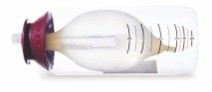
Above: Infusion device (Baxter healthcare)
Who will give my IV antibiotic?
If you would like to learn how to give the IV antibiotic yourself or have a carer who would be able to help, we can arrange training for this in the OPAT clinic. Training usually takes place in the OPAT clinic and the time taken varies but is typically around 5 days. You may decide to come to the OPAT clinic for your antibiotic infusion and a clinic nurse will administer the medicine.
What should I expect if I go home with an infusion device?
You can go home a day before the delivery of your antibiotics at home. You will be contacted by our independent homecare team (usually by text message or a call) for the following:
- medication fridge delivery
- supplies delivery
You will also receive a call from our OPAT team about your clinic appointment. For any questions regarding the deliveries please call Baxter on 0800 0288 966.
What should I expect if I go home with an antibiotic that needs mixing?
We will train you (or a carer) to administer your antibiotics in OPAT clinic. This may be whilst you are in hospital or by visiting clinic for your infusion. You will be given an information leaflet for self-administration and the OPAT nurses will train and assess you to do it safely.
You will be provided with the following before you go home:
- your antibiotics
- supplies for administration from the OPAT service.
How do I look after the access line?
A clean, see-through dressing will be applied over the line to reduce the risk of infection. This will be changed weekly by our nurses. They will also look for any early indications of an infection. If your dressing becomes moist or looks unclean, you should inform the OPAT nurses.
You can have showers or baths with your IV line inserted, but you must make sure that the dressing is kept dry. Swimming or other water sports should be avoided. You should also avoid lifting heavy objects, repetitive arm movements and contact sports with a line in. These can increase the risk of problems with the line.
How long does it take for the antibiotic to be given?
Some antibiotics can be given by a slow 5-minute injection, but other antibiotics take 30 to 60 minutes. Patients who have antibiotics in an infusion device are usually attached for 24 hours (these can be worn under clothing). Patients who are getting antibiotics through an infusion device can still do most normal activities while attached to this device. We will advise you of what to expect for your antibiotic before you start in OPAT.
How many times a day do I have the antibiotics?
Most patients need the intravenous antibiotic once a day, but a few patients may need the antibiotic twice a day. It is rare for IV antibiotics to be given more than twice a day through the OPAT service. Some antibiotics are given less often.
How long is my treatment?
The length of your treatment depends on the type of infection; it can be weeks or months. Your doctors will explain how long you need the antibiotics before you start OPAT, but please be aware this may change depending on your response to treatment.
What are the risks?
Sometimes patients have problems whilst on antibiotics. Here are some of the common things to look out for:
- rash
- diarrhoea
- fever
- feeling hot or cold
- high temperature
- pain
- redness and swelling around the IV line or cannula (may appear as purplish discoloration on dark coloured skin)
- blocked IV line or cannula
- Arm pain and swelling on the side with the IV line.
Please call us on one of the numbers listed below if you experience any of these symptoms.
If the IV line falls out, use cotton wool or a tissue and put pressure on the site until the bleeding stops. You must then contact the OPAT team on tel: 01482 461072 (Monday to Friday, 8am to 4pm). Out of hours, please use tel: 01482 468907 to contact Ward 7 CHH.
If you experience any of the following medical emergencies, dial tel: 999 for an ambulance or go to the accident and emergency department (A&E) that is closest to you. If this happens during your antibiotic infusion, stop it immediately.
- chest pain
- swelling of lips and face
- difficulty in breathing
What to do if ….
The infusion device leaks or bursts
- Immediately clamp your IV line.
- Disconnect the device and clamp the tubing or replace the cap at the end of the device tubing.
- Immediately call the OPAT team on tel: 01482 461072 (Monday to Friday, 8am to 4pm) or Ward 7 CHH tel: 01482 468907 (evenings, weekends and bank holidays).
- If the antibiotic comes into contact with your skin, immediately wash it off with soap and water.
- Do not throw away the infusion device.
The infusion device does not infuse
- Check your IV line or the elastomeric pump if it’s clamped or kinked.
I see some bubbles in my IV line
- A very small bubble will not cause any problems.
- If you noticed that there are multiple long bubbles on your IV line and are concerned, clamp the IV line and call OPAT CNS (Monday to Friday, 8am to 4pm) or Ward 7 CHH (evenings, weekends and bank holidays).
Who to contact.
OPAT service (Monday to Friday, 8am to 4pm) on tel: 01482 461072.
Out of hours contact ward 7 CHH on tel: 01482 468907.
In an Emergency, please call tel: 999 or go to your nearest emergency unit (A&E)
This leaflet was produced by the OPAT Service, Hull University Teaching Hospitals NHS Trust and will be reviewed in July 2028.