- Reference Number: HEY1015/2025
- Departments: Nutrition Support, Renal Service
- Last Updated: 31 August 2025
Introduction
One of the benefits of having a kidney transplant is that you can typically enjoy a more varied diet. However, some dietary changes may be required, and your kidney dietitian will guide you with this.
The aim of this diet booklet is to explain the importance of nutrition and food safety after your kidney transplant.
This leaflet was created by Renal Dietitians from:
- NHS Humber Health Partnership
- Leeds Teaching Hospitals NHS Trust
- York and Scarborough Teaching Hospitals NHS Trust
Immediately after your operation
A good nutritional intake will help your recovery. Eating enough of the right foods can help to prevent infections and heal wounds. If your appetite is poor after your operation, your dietitian can offer advice on how to improve your food intake or suggest nutritional supplement drinks to take.
Your transplant medications may affect your blood results, and you may need to alter your diet. However, this is usually short term, and your dietitian will guide you through any changes.
Food safety is important to prevent any foodborne illness (food poisoning), which may result in vomiting and diarrhoea. This may cause you to become dehydrated or not absorb your transplant medications.
How do transplant medications affect my diet?
Early side effects may include:
High blood potassium level – this may occur for a short time after your transplant. If necessary, you will be advised to reduce your intake of foods high in potassium.
Low blood phosphate level – this may occur for a short time after your transplant. If necessary, you will be advised how to increase the phosphate in your diet.
Unstable blood glucose level – if necessary, you will be given advice to help manage this. If you have diabetes, you may also wish to discuss this with your diabetes specialist nurse or dietitian.
Longer term side effects can include:
Weight gain – This is common, especially in the first year after your transplant. It is usually due to a combination of eating too well, lack of exercise or activity and the effect of some tablets, such as steroids.
Being overweight can lead to high blood pressure and cholesterol levels which, can lead to diabetes and heart disease. Keeping a healthy weight can help maintain the lifespan of your kidney transplant.
Food Safety
Immediately after your transplant surgery, you will start taking immunosuppressive medications to prevent your body from rejecting the new kidney. These medications weaken your body’s ability to fight infection, including those that can come from food. It is important to prevent foodborne illness, as during episodes of vomiting and diarrhoea you can become dehydrated and not absorb your medications.
While food safety is especially important during the first 6 months after your transplant surgery, you should continue to follow food safety advice for the lifetime of your transplant.
Minimise the Risk of Getting Foodborne Illness by following the 4 C’s
- Wash your hands properly and keep them clean especially before handling food, preparing food and before eating. Keep work tops, chopping boards and utensils clean at all times. Wash and change dish cloths and tea towels
- Cook food thoroughly (to 75°C) or follow the manufacturer’s cooking instructions on food packaging. Eat cooked food within an hour of making. Do not eat food that is past its ‘use by’ date and discard food that is out of
- Chill food quickly (cool cooked food at room temperature and then place in the fridge within 1-2 hours). Store leftovers in the fridge in sealed containers and eat within 2 days. Keep fridges at the correct temperature (between 0-5°C) and freezers at -18°C. Defrost foods fully in the fridge where possible.
- Avoid cross-contamination, this is most likely to happen when raw food touches or drips onto ready- to-eat food, equipment or surfaces. Store raw foods at the bottom of the fridge and ready-to-eat foods above. Use different chopping boards and utensils for raw and ready- to-eat
High risk foods
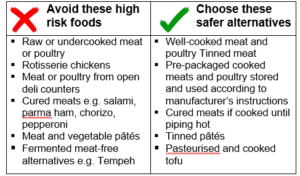
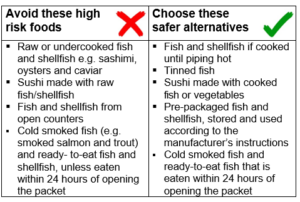
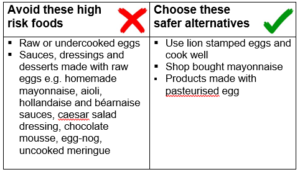
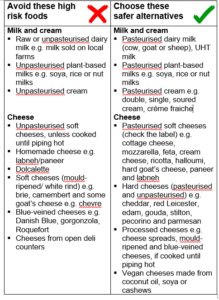
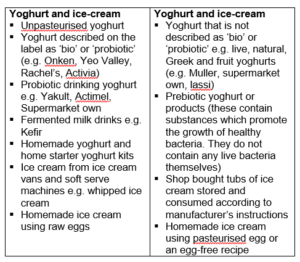
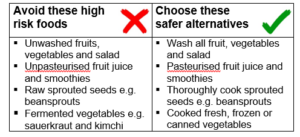
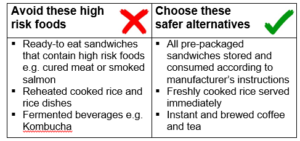
After your transplant you should avoid foods which put you at greater risk of a foodborne illness. The following tables list the high-risk foods to avoid and safer alternatives to choose instead.
Meat and meat-free foods
Fish
Eggs
Dairy and plant-based alternatives
Fruit and vegetables
Miscellaneous
Eating out and takeaways
Eating out and takeaway meals should be avoided for the first 6-8 weeks after your transplant. After this time, eating out can be enjoyed if following food safety advice.
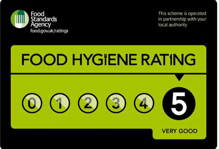
Every business selling food will be given a food hygiene rating issued by the local authority. This provides guidance on the overall cleanliness of a business and whether it is a suitable place to eat. The Food Standards Agency website (http://ratings.food.gov.uk) list all the ratings and a mobile phone app is also available.
Choose restaurants with a high, or level 5, food hygiene rating and decide on menu options using the guidance in this booklet. Caution should be taken when eating foods from buffets, street vendors, deli counters and salad bars due to the risk of cross-contamination.
Tips to enjoy eating out safely:
- Check the eating area is clean and tidy
- Avoid all high-risk foods on the menu or enquire if unsure
- Try to order a plated meal that is cooked fresh to order
- Avoid foods from salad bars and deli counters
- Ensure your meal is piping hot and thoroughly cooked when it arrives
- Avoid rice that has already been cooked; ask for it to be cooked fresh or choose another option such as potato, pasta, chips, chapatti or noodles
- Beef burgers should be well done, even if freshly made, as there is a risk of food poisoning with minced/ground beef if not cooked thoroughly
- If you need to eat from a buffet it is recommended to try to be first in the queue and not to go back for further servings as there is a risk the food may have been contaminated by other diners.
Long term dietary considerations
Weight gain is common after a transplant. This is due to relaxed dietary restrictions and a general sense of well-being, as well as potentially steroid-induced hunger. Most weight gain has been found to occur during the first 6-12 months after transplantation. Keeping a healthy weight can help maintain the lifespan of your kidney transplant.
A healthy diet includes eating foods which are low in fat, sugar, salt and high in fibre. In particular, continue to be careful with the amount of salt you eat to help manage your blood pressure. Including enough calcium in your diet is also important to keep your bones healthy and reduce the risk of osteoporosis. You may be referred to a dietitian for advice if your intake of calcium is low.
If you require further information about your diet please speak with your transplant team who can refer you to a kidney dietitian.
Frequently asked questions
Do I need to be careful with my diet if I travel abroad?
It is important to take extra care following food safety advice when you travel abroad. Please discuss this with your dietitian before travelling to help reduce the risk of a foodborne illness.
I’ve heard that I shouldn’t drink bottled water, is this true?
Bacteria can be found in some bottled waters so it is recommended to avoid non-carbonated (still) bottled and mineral water. Carbonated (fizzy) bottled water and treated tap water are safer alternatives. If you travel abroad you should avoid tap water if it is unsafe.
Why should I not eat reheated rice?
Uncooked rice can contain spores of bacteria (Bacillus cereus) that can cause food poisoning. The spores can survive even when rice is cooked. If cooked rice is left standing at room temperature, the spores can grow into bacteria. These bacteria will multiply and may produce toxins (poisons) that cause vomiting or diarrhoea. It is best to eat rice immediately after cooking to reduce the risk of the spores becoming bacteria.
Why should I avoid certain yoghurts?
Bacteria naturally found in yoghurt are destroyed by the acidic nature of the stomach. However, the extra probiotic bacteria added to ‘probiotic’ or ‘bio’ yoghurts may survive. It is therefore best to avoid ‘probiotic’ and ‘bio’ yoghurts to reduce the risk of illness. Plain, natural, Greek, fruit and live yoghurts are safer alternatives.
NOTES:
|
|
This leaflet has been produced by the Hull University Teaching Hospitals NHS Trust and is available as a download:
Download the “Diet and your kidney transplant” leaflet