

A pioneering team of head and neck surgeons will put NHS Humber Health Partnership on the international map next month when they present their groundbreaking work at a prestigious European conference.
Consultant Maxillofacial Surgeon Mr Kelvin Mizen and Consultant Plastic Surgeon Miss Noemi Kelemen have been invited to speak at the European Society of Surgical Oncology (ESSO) meeting in Gothenburg, Sweden, from 15 to 17 October.
Their presentation will highlight innovative techniques that have transformed treatment for around 60 patients with head and neck tumours. By using computer-assisted design software, the team has improved the precision of tumour removal while ensuring patients are treated within the NHS’s 31-day and 62-day cancer targets.
The software enables the creation of customised 3D-printed plastic cutting guides and precisely engineered metal reconstruction plates. These tools allow surgeons to remove tumours completely while reconstructing the patient’s face or neck with minimal damage to healthy tissue.
Mr Mizen said: “Until recently, the main challenge was getting the guides and plates manufactured quickly enough. Everything was produced in Belgium and while the plastic guides arrived relatively fast, the metal plates took far longer. Now, technology has caught up. What once took weeks can now be done in just 10 days.”
Since adopting the computer-assisted approach, the NHS Humber Health Partnership team has achieved 100pc success in removing all cancerous tissue from the bone in patients with head and neck tumours.
“We’ve, so far, never failed to clear the cancer in any case since we began using this technique,” Mr Mizen said.
The invitation to the ESSO conference follows another significant achievement earlier this year. In May, Mr Mizen, Miss Kelemen and Senior House Officer Dr Lato Abebe presented their research to the British Association of Head and Neck Oncologists. Dr Abebe outlined their pioneering use of specialist imaging software to evaluate the viability of fibula segments for facial reconstruction.
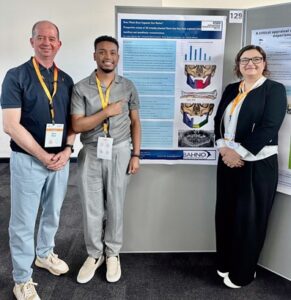
Traditionally, surgeons believed bone fragments needed to be at least 3cm long for use in reconstruction. However, the HHP’s research has shown that segments as small as 18mm can be successfully transplanted, opening new possibilities for patients requiring complex facial surgery. They are now preparing a full paper on this work for submission to a leading reconstruction journal.
In addition, the team were recently the winners of the Yorkshire Cancer Alliance Awards, where they had been shortlisted in the Innovation and Technology category.
Mr Mizen said: “We often just get on with our work quietly, always focused on doing the best for patients. It’s really encouraging to see the team’s efforts being acknowledged on both a national and international level.”