
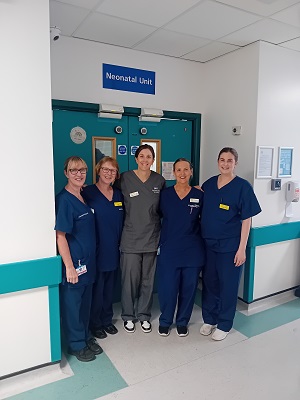
Hull’s Neonatal Intensive Care Unit (NICU) is setting the standard in premature care by introducing a team of expert therapists to support babies and their families.
Dietitian Sally Aitken, Occupational Therapist Claire Douglas, Clinical Psychologist Rachel Foxwell, Speech Therapist Alexandra Smuts and Physiotherapist Victoria Ingram work together with neonatology doctors, nurses and health care assistants to help babies born as early as 22 weeks’ gestation, weighing 500g.
Hull is a Level 3 NICU, caring for babies with the highest need from all over the country, and NICU Matron Francesca Matthews and Consultant Neonatologist Dr Eleanor Peirce have created the multi-disciplinary team (MDT) to give these babies the best chance of survival.
The therapists also support staff, educating them on the best ways of handling, feeding, protection and stimulation of the babies at the appropriate stages of their development.
Francesca said: “Our babies have very specific needs and we’ve introduced this holistic approach, tapping into every aspect of health care, to meet those needs.
“By working on every aspect of their care, parents can be certain their babies are receiving the gold standard in neonatal care in Hull, with the shared ultimate goal of getting the best health outcomes for their children.”
Babies experience rapid brain development and develop neural pathways in the womb during the last trimester of pregnancy. Premature birth can disrupt this development and those born as early as 22 weeks’ gestation have to go through this crucial stage outside the womb.
NICU’s Allied Health Professionals and Psychological Professional (AHPP) team help to create and support a protective environment for the babies, promoting developmental cares, such as skin to skin contact, often called “kangaroo care” This practice offers numerous benefits for both baby and the parent, including regulating temperature and breathing, supporting breastfeeding and promoting bonding.
The AHPPs can also offer specialist assessment and advice for feeding and swallowing, nutrition, physical development and parental emotional wellbeing, work collaboratively to provide comprehensive care for neonates and their family.
They support parents who may have post traumatic stress disorder or are struggling with what they and their babies are experiencing and they also support staff who have to deal with traumatic incidents involving the tiniest and sickest patients in the country on a regular basis.
The therapists are currently working 2.5 days a week on the unit although the hope is that the input from the therapists will increase to a five-day service, including follow-up care.